Blogs / How to Turn One Idea Into Blogs, Videos, Voice, and Social Posts Using AI
How to Turn One Idea Into Blogs, Videos, Voice, and Social Posts Using AI
Klyra AI / February 16, 2026
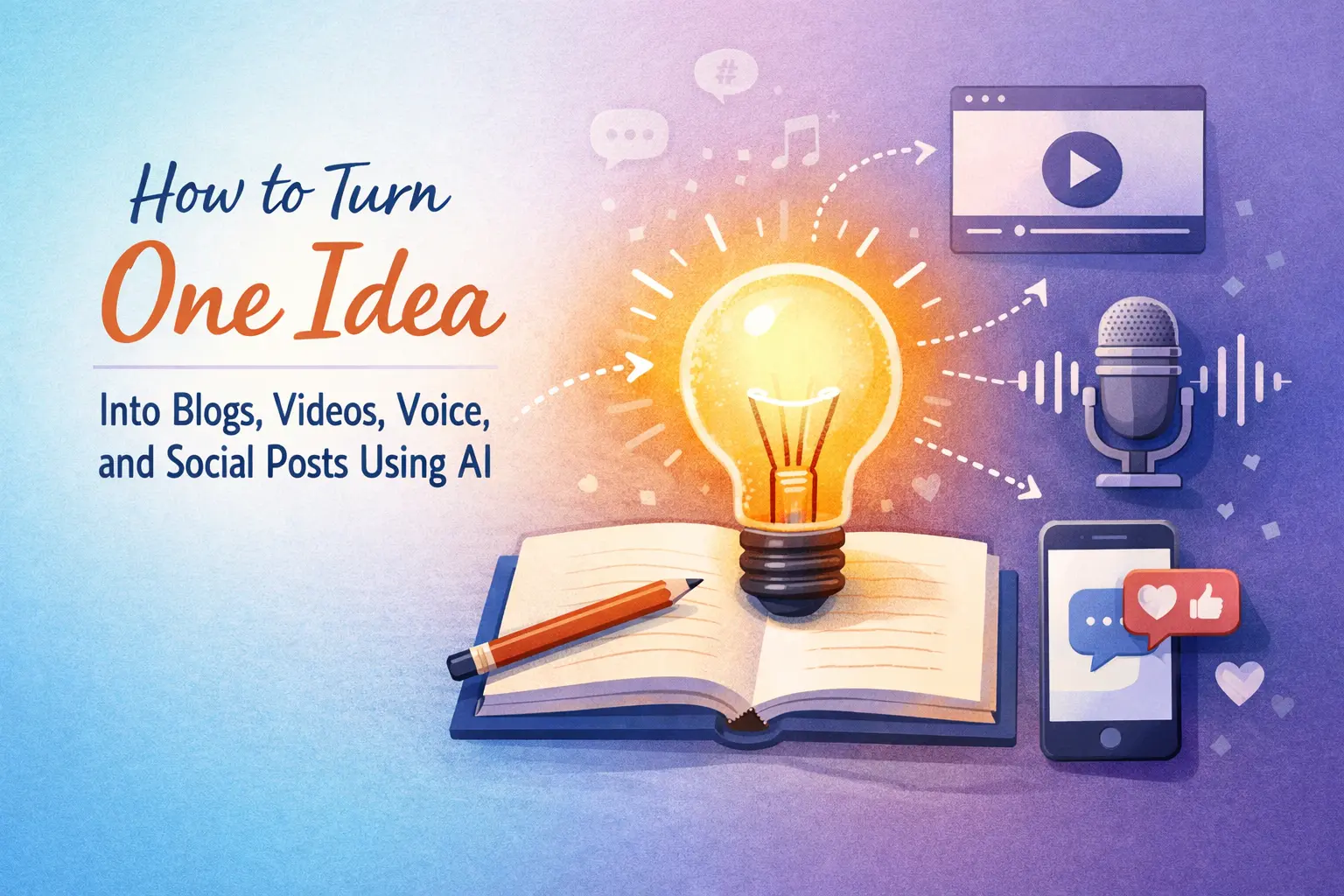
How to Turn One Idea Into Blogs, Videos, Voice, and Social Posts Using AI
Content teams often struggle with consistency and volume. Brainstorming new ideas for every platform is time-consuming and inefficient.
A more scalable approach is content repurposing: starting with one strong idea and transforming it into multiple formats across channels.
With AI-powered workflows, teams can turn a single concept into a blog post, video, voiceover, and social media content without rebuilding the message from scratch each time.
Why Repurposing Content Is More Effective Than Starting From Scratch
Creating separate ideas for every format leads to fragmented messaging and inconsistent brand tone.
Repurposing ensures that your core message remains aligned across platforms while adapting to different audience behaviors.
It also maximizes the value of research and planning effort invested in the original concept.
Step 1: Develop a Strong Core Idea
Every multi-format content workflow begins with a clear and structured core idea.
Teams can use tools such as AI Chat to research a topic, summarize sources, and extract key insights before drafting.
Once the direction is defined, a structured draft can be created using AI Writer, forming the foundation for all other formats.
Step 2: Turn the Blog Into a Video Script
A well-structured blog post can easily be transformed into a video script by simplifying language and adding visual cues.
Instead of rewriting from scratch, AI can extract the main sections and adapt them into a script format suitable for video production.
From there, tools like the AI Video Generator can convert the script into dynamic visual content.
Step 3: Generate Voiceovers or Narration
Videos, podcasts, and short-form content often require narration. AI voice systems allow teams to generate professional voiceovers without recording sessions.
Using AI Voiceover, scripts can be converted into expressive narration in multiple languages and tones.
This step enables rapid iteration and updates without studio time.
Step 4: Create Supporting Visuals and Images
Blog posts and social posts benefit from strong visuals. Instead of sourcing stock images manually, teams can generate branded visuals aligned with the original idea.
Integrated tools within the AI Image Suite allow marketers to create images that match the blog theme and campaign style.
This ensures visual consistency across formats.
Step 5: Adapt for Social Media Platforms
Different platforms require different content lengths and formats. A blog headline may become a LinkedIn post, while key insights can be converted into short captions or video snippets.
With systems like AI Social Media, teams can schedule and manage platform-specific variations from one dashboard.
This removes the need for separate social management tools.
The Benefits of a Unified Multi-Format Workflow
- Efficiency: One idea fuels multiple outputs.
- Consistency: Message and tone remain aligned.
- Scalability: Content volume increases without added complexity.
- Speed: Adaptation across formats happens quickly.
Instead of creating isolated pieces of content, teams build connected assets that reinforce one another.
Common Mistakes in Content Repurposing
Some teams copy content directly across platforms without adaptation. This reduces engagement and may harm credibility.
Effective repurposing adjusts tone, length, and presentation while preserving the core idea.
AI helps automate transformation, but strategic oversight ensures quality and relevance.
Final Thoughts
Turning one idea into multiple content formats is not about duplication. It is about amplification.
With a connected AI workflow, teams can research once, create once, and distribute across formats efficiently.
As content demands continue to grow, systems that support multi-format repurposing will define the next stage of scalable content creation.