Blogs / AI Product Photography vs Traditional Photoshoots: Cost, Speed, and Scalability Compared
AI Product Photography vs Traditional Photoshoots: Cost, Speed, and Scalability Compared
Klyra AI / February 14, 2026
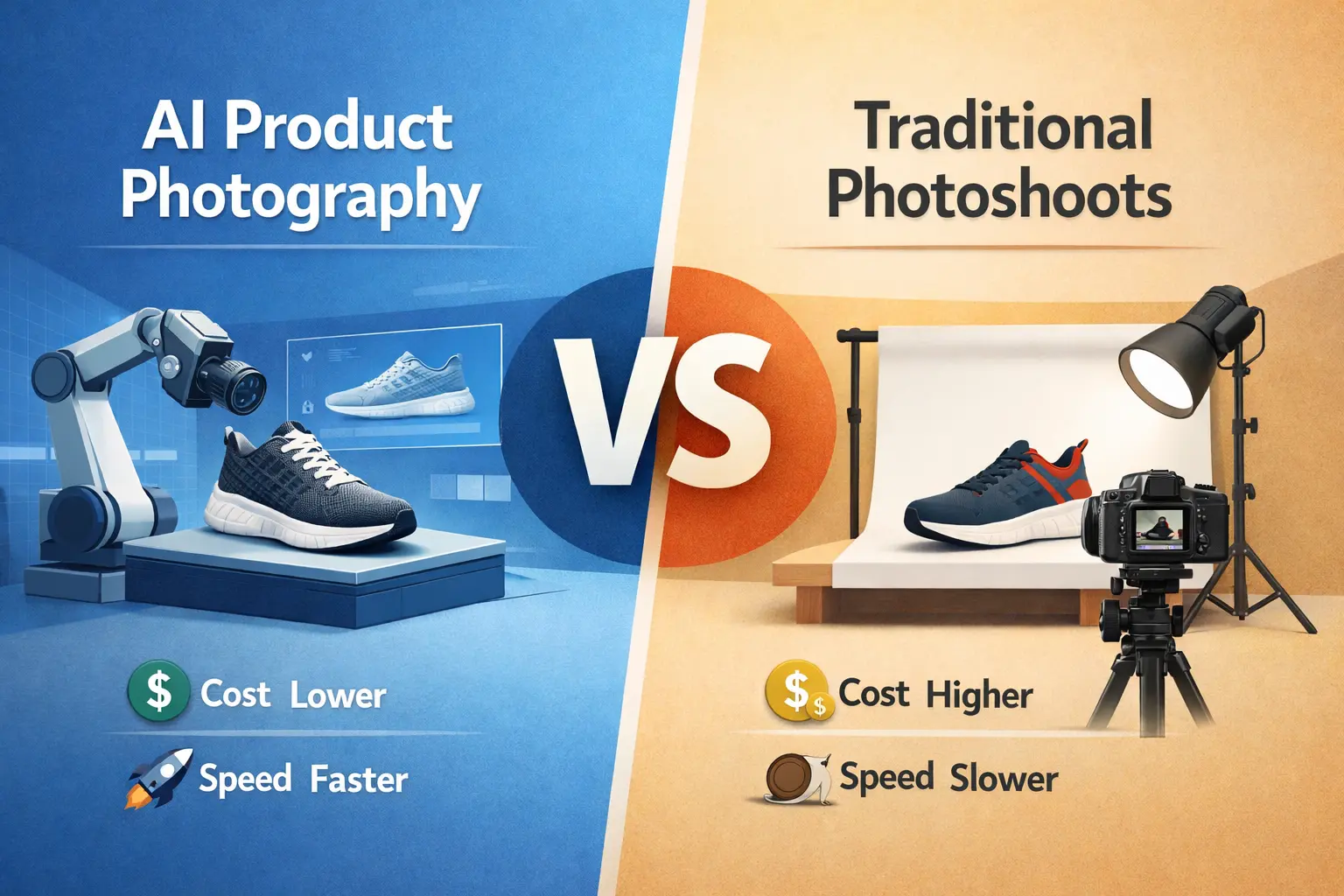
AI Product Photography vs Traditional Photoshoots: Cost, Speed, and Scalability Compared
High-quality product images are essential for ecommerce, marketing, and brand perception. Clean lighting, consistent backgrounds, and professional composition influence buying decisions.
For years, traditional photoshoots were the only way to achieve this level of quality. Today, AI product photography offers an alternative that promises speed, flexibility, and cost efficiency.
This guide compares AI product photography and traditional photoshoots to help you decide which approach fits your business needs.
What Traditional Product Photoshoots Involve
A traditional photoshoot typically requires a photographer, lighting equipment, studio space, styling, editing software, and post-production work.
For a single product line, this process can take days or weeks. For large catalogs, the timeline and cost increase significantly.
While traditional shoots deliver highly controlled results, they require coordination and planning that may not scale easily for growing ecommerce operations.
What Is AI Product Photography?
AI product photography uses artificial intelligence to transform basic product images into studio-quality visuals. Instead of building physical sets, AI generates realistic lighting, backgrounds, and environments digitally.
Tools like AI Product Photography allow teams to remove backgrounds, create branded scenes, and produce consistent product visuals at scale.
This approach reduces the need for repeated studio sessions and manual retouching.
Cost Comparison
Traditional Photoshoot Costs
Expenses typically include photographer fees, studio rental, lighting setup, editing time, and sometimes models or props.
Re-shoots for new campaigns or seasonal updates add additional costs.
AI Product Photography Costs
AI-driven workflows eliminate physical setup and reduce editing time. Once a clean base image is captured, variations can be generated digitally.
This significantly lowers per-image cost, especially for businesses managing large product catalogs.
Speed and Production Time
Traditional shoots require scheduling, setup, shooting, and editing. Even small product updates can trigger new sessions.
AI workflows allow teams to generate new backgrounds, scenes, or variations in minutes. Using tools within an integrated AI Image Suite, marketers can quickly adapt visuals for different platforms or campaigns.
Scalability for Ecommerce Catalogs
Scaling traditional photography across hundreds or thousands of SKUs is resource-intensive.
AI systems allow consistent styling across entire catalogs, ensuring brand alignment without repeating physical production processes.
For growing ecommerce brands, this scalability can dramatically improve speed to market.
Creative Flexibility
Traditional photography offers real-world textures and lighting that can be difficult to replicate perfectly.
However, AI tools provide creative flexibility by allowing rapid experimentation with environments, moods, and seasonal themes without rebuilding physical sets.
With editing tools such as AI Photo Studio, teams can refine images through inpainting, outpainting, and resolution enhancement.
Best Use Cases for AI Product Photography
- Ecommerce product catalogs
- Marketplace listings
- Seasonal promotional variations
- Social media product campaigns
- Rapid product launches
In these scenarios, speed and consistency often matter more than elaborate physical setups.
Best Use Cases for Traditional Photoshoots
- Luxury brand campaigns
- High-end print advertising
- Editorial shoots with complex styling
- Situations requiring real-world models and environments
When authenticity and tactile detail are central to brand identity, traditional photography may remain the preferred choice.
Choosing the Right Approach for Your Business
The decision depends on scale, budget, and marketing strategy.
For fast-moving ecommerce businesses with frequent product updates, AI product photography offers efficiency and flexibility.
For premium campaigns that emphasize realism and emotional storytelling, traditional photoshoots may provide added value.
Many brands adopt a hybrid approach, using traditional shoots for flagship campaigns and AI workflows for ongoing catalog management.
Final Thoughts
AI product photography does not eliminate the need for professional photography entirely. Instead, it expands what is possible for teams operating at scale.
By reducing cost, accelerating production, and enabling creative experimentation, AI-powered image workflows provide a practical solution for modern ecommerce demands.
Understanding when to use each approach allows brands to balance quality, efficiency, and scalability effectively.