Blogs / Using AI to Analyze Documents at Scale Without Missing Context
Using AI to Analyze Documents at Scale Without Missing Context
Klyra AI / January 26, 2026
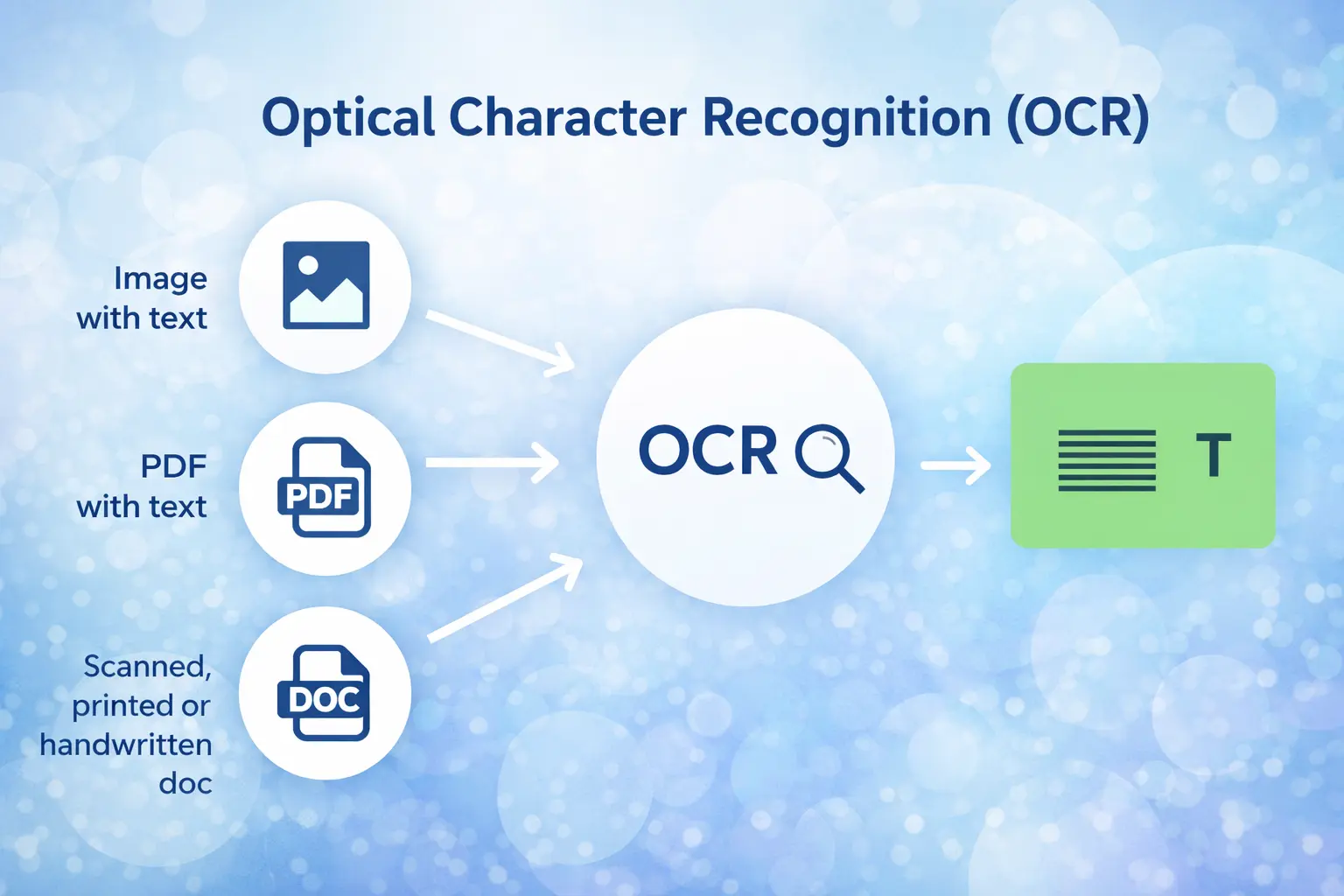
Modern organizations are overwhelmed by documents. Contracts, reports, invoices, research papers, emails, and internal records accumulate faster than humans can reasonably process them.
AI promises relief. Thousands of pages can be scanned, extracted, and summarized in minutes. Patterns emerge instantly. Insights surface without weeks of manual review.
Yet many teams discover an uncomfortable tradeoff. As scale increases, context disappears. Important nuances are flattened. Critical exceptions are missed. Confidence drops just as speed rises.
The challenge is not whether AI can analyze documents at scale. It is whether it can do so without losing the meaning that makes documents valuable in the first place.
Why Document Scale Has Always Been a Human Bottleneck
Document analysis is cognitively expensive. Humans are good at understanding nuance but poor at handling volume.
As document counts grow, teams resort to shortcuts. Skimming replaces reading. Templates replace judgment. Important details slip through unnoticed.
AI changes the economics of scale by handling repetition and extraction effortlessly.
What it does not automatically handle is context.
What Context Actually Means in Document Analysis
Context is not just surrounding text. It includes intent, provenance, structure, and relevance to a specific decision.
Two identical clauses can mean very different things depending on jurisdiction, purpose, or audience.
Humans infer this naturally. AI requires explicit grounding.
Losing context is not a technical error. It is a workflow design failure.
Why Naive Automation Fails at Scale
Many document automation efforts start with a simple goal. Extract everything and summarize it.
This approach works for small batches but breaks at scale. Outputs become generic. Exceptions vanish into averages.
AI is doing exactly what it was asked to do. The problem is what it was asked to ignore.
Context must be designed into the process, not expected as a byproduct.
AI Excels at Structure, Not Interpretation
AI is exceptionally good at turning unstructured documents into structured data.
Tables, fields, entities, and relationships can be extracted with high accuracy.
This is where AI delivers its most reliable value.
Interpretation, however, remains a human responsibility.
Separating Extraction From Understanding
High-performing teams separate document workflows into two phases.
First, AI extracts and organizes information. Second, humans interpret and decide.
This separation prevents AI from overreaching and humans from being overwhelmed.
Speed improves without sacrificing judgment.
Designing Context-Aware Document Pipelines
Context-aware pipelines anchor AI outputs to source material.
Every extracted element can be traced back to its original location.
This traceability allows humans to validate meaning instead of trusting abstraction.
Confidence grows because verification is easy.
Why Document Type Matters More Than Volume
Not all documents require the same level of contextual fidelity.
Invoices, forms, and receipts benefit heavily from automation. Legal, financial, and strategic documents require deeper human review.
Effective workflows adjust AI involvement based on document criticality.
Uniform automation is rarely appropriate.
Scaling Extraction Without Scaling Risk
The goal of AI document analysis is not to remove humans from the loop.
It is to reduce the amount of human attention required per document.
By handling extraction and normalization, AI frees experts to focus on exceptions and implications.
Risk decreases as attention becomes more focused.
Where AI Document Tools Add the Most Value
The most successful use cases involve structured extraction combined with contextual review.
Tools like AI Textract demonstrate this balance by preserving layout, relationships, and key-value structure while converting documents into usable data.
This allows teams to scale processing without flattening meaning.
Automation supports decisions instead of replacing them.
Why Context Loss Is So Hard to Detect
Context loss rarely produces obvious errors.
Outputs look clean. Summaries appear reasonable. Problems surface only when decisions go wrong.
By then, the root cause is difficult to trace.
Designing for context upfront prevents silent failure.
Human Review Becomes More Strategic
AI does not eliminate review. It changes its focus.
Instead of reading everything, humans review what matters most.
Attention shifts from extraction to evaluation.
This is where professional expertise delivers the most value.
Document Analysis Is an Information Science Problem
At its core, document analysis is about transforming information into understanding.
This discipline has long emphasized structure, relevance, and context as foundational principles.
The formal study of document analysis reflects this balance between automation and interpretation.
AI accelerates the process. It does not change the principles.
Why Context Preservation Builds Trust
When teams can trace insights back to original sources, trust improves.
Stakeholders accept AI-assisted conclusions because validation is possible.
This transparency matters more as decisions become higher stakes.
Trust is built through traceability.
From Volume Handling to Insight Generation
Organizations that succeed with AI document analysis move beyond throughput metrics.
They measure how effectively insights support decisions.
Context-aware systems consistently outperform brute-force automation.
Quality emerges from design, not scale.
Scale Without Blindness
AI makes large-scale document analysis possible.
Context makes it safe.
Teams that combine structured extraction with human interpretation gain speed without losing understanding.
In document-heavy workflows, this balance is no longer optional. It is the standard.