Blogs / How AI Sound Studios Are Replacing Complex Audio Editing With Streamlined Production
How AI Sound Studios Are Replacing Complex Audio Editing With Streamlined Production
Klyra AI / January 14, 2026
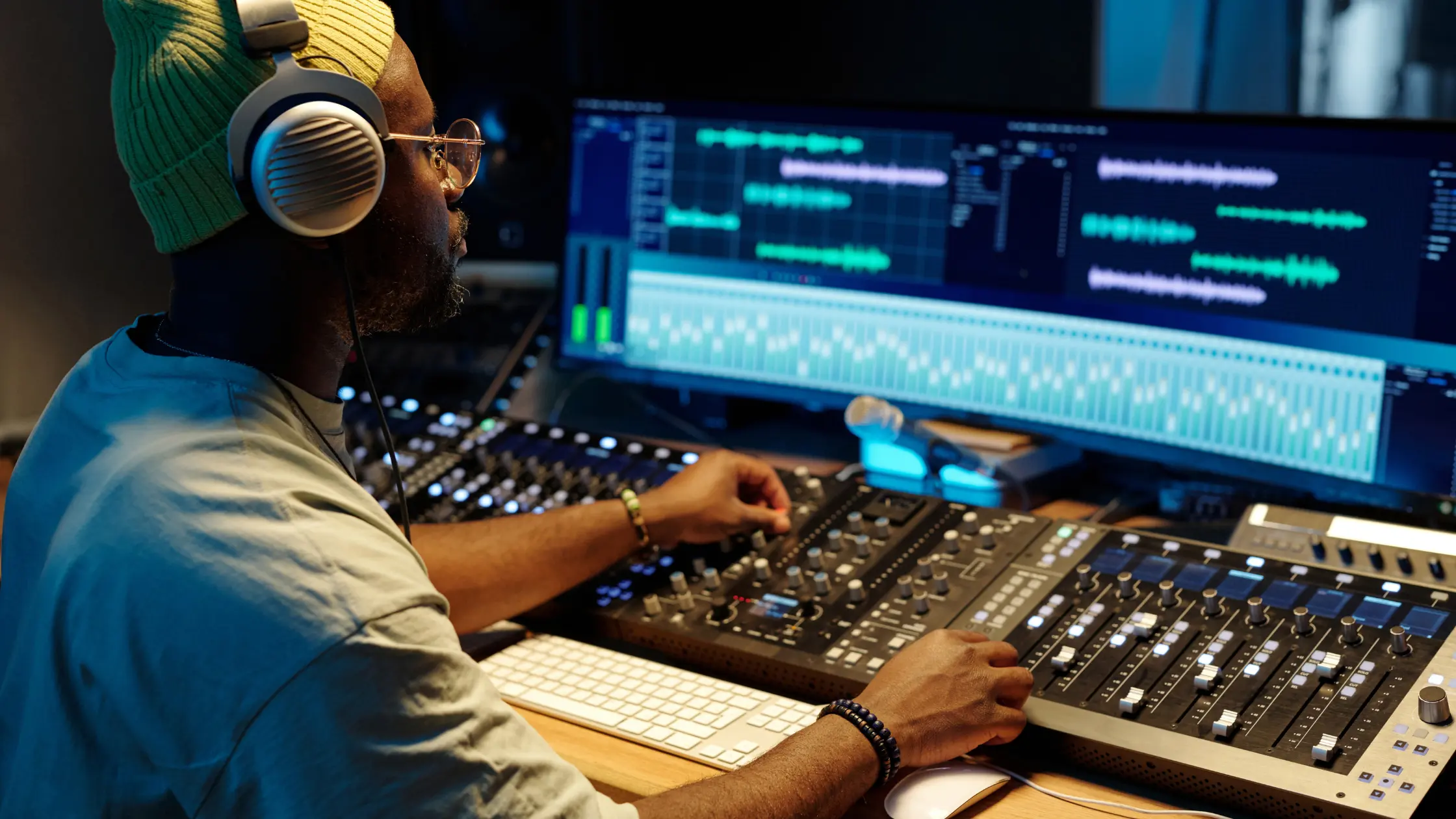
Audio production has always been a game of layers. Voiceovers, background music, transitions, and effects must be combined carefully to sound professional. Even when individual elements are high quality, poor mixing can make the final result feel amateur or distracting.
For many teams, this final stage of audio production is the most intimidating. Editing software is complex, workflows are technical, and small mistakes can degrade clarity. By 2026, AI sound studios are changing this reality by turning audio post production into a guided, reliable process rather than a specialist skill.
Why Audio Post Production Becomes a Bottleneck
Recording voiceovers or generating music is only part of the workflow. The real challenge begins when these elements must be combined into a cohesive track.
Manual audio mixing requires understanding levels, timing, and balance. Voice must remain clear over music. Transitions must feel natural. Inconsistent volume quickly frustrates listeners.
For non specialists, this learning curve slows output and introduces hesitation around using audio at all.
What AI Sound Studios Actually Change
AI sound studios focus on the most error prone parts of audio production. They automate level balancing, mixing, and polish so individual elements work together naturally.
Instead of manually adjusting waveforms, users combine voiceovers and music, then let the system handle technical refinement. The result is clean, consistent audio that sounds intentionally produced.
This shifts audio from a technical challenge into a creative decision.
From Raw Voiceovers to Finished Tracks
Many modern workflows generate voiceovers using AI or record them quickly without studio equipment. These recordings are often clean but unfinished.
An AI sound studio turns these raw inputs into complete tracks by aligning timing, smoothing volume differences, and ensuring clarity across the entire recording.
This allows teams to publish audio content confidently without extensive post processing.
Why Balance Matters More Than Effects
Professional audio rarely relies on heavy effects. What distinguishes it is balance. Voice sits comfortably above music. Pauses feel intentional. Nothing competes for attention.
AI sound studios are designed around this principle. They optimize balance automatically rather than encouraging overproduction.
This produces audio that feels calm, focused, and listener friendly.
Real World Use Cases Across Teams
AI sound studios are used in podcasts, training modules, explainer videos, advertisements, and product demos. Any scenario that combines narration with music benefits from streamlined mixing.
Marketing teams use them to finish voiceovers quickly. Educators use them to produce clear lessons. Content teams use them to maintain consistent sound across episodes or series.
In each case, the value lies in predictability and speed.
How Klyra AI Approaches Audio Production
Klyra AI Sound Studio is designed to merge, mix, and polish AI generated voiceovers into studio quality final tracks.The tool allows users to combine multiple voice recordings, add background music from a built in library or custom uploads, and fine tune balance automatically for clean, professional output.
Reducing Technical Friction for Creators
One of the biggest advantages of AI sound studios is confidence. Creators no longer worry about whether audio is mixed correctly.
This encourages broader use of audio across content strategies. Teams experiment more when finishing audio is predictable.
Lower friction leads to higher output and more consistent quality.
Human Judgment Still Shapes the Final Result
AI sound studios do not eliminate creative decisions. Humans still choose pacing, music style, and structure.
The system handles execution while creators focus on message and tone.
This division of responsibility is what makes audio production sustainable at scale.
Industry Context and Evolution
Audio mastering and mixing have traditionally been handled by specialists using complex software. AI driven tools now abstract that complexity without removing control.
An overview of audio mixing and mastering concepts is available through Wikipedia’s reference on audio mixing, which explains how multiple sound sources are combined into a final track.
Why AI Sound Studios Are Becoming Audio Infrastructure
As audio becomes central to communication, production must become repeatable and reliable.
AI sound studios provide that reliability by ensuring every track meets a baseline of quality without manual intervention.
For modern teams, this capability is moving from optional enhancement to core infrastructure.
The Long Term Outlook
Over time, AI sound studios will fade into the background of content workflows. Audio will be mixed automatically as it is created.
Listeners will not notice the process. They will notice clarity and consistency.
In a world where voice and sound shape perception, AI sound studios are quietly redefining how professional audio is produced.