Checklists

SOP Readiness Assessment

Assess your organization's readiness for SOP implementation across processes, resources, training, quality control, compliance, and future growth.

Free resource from Klyra AI
SOP Readiness Assessment Free Download
About This Resource

A practical resource for moving forward

The SOP Readiness Assessment is a practical checklist designed to help organizations evaluate whether they have the right foundation in place before implementing Standard Operating Procedures (SOPs).

Successful SOP adoption requires more than documenting a set of instructions. Organizations need to understand which processes should be documented first, how existing workflows operate, what resources are available, how employees will be trained, and how procedures will be reviewed and improved over time.

This assessment organizes those considerations into seven areas: process documentation readiness, infrastructure and resources, training, quality control, change management, compliance and risk management, and scaling and automation preparation.

By working through the checklist, organizations can identify areas that require attention before or during SOP implementation. It covers practical considerations such as prioritizing critical processes, creating standardized documentation templates, assigning responsibilities, defining performance indicators, planning employee training, reviewing regulatory requirements, assessing process risks, and preparing procedures for future growth and automation.

Use the assessment as a structured starting point for evaluating SOP preparedness and identifying the organizational foundations needed to support effective, maintainable procedures.

Inside the Resource

What You Will Find Inside

A clear look at the ideas, guidance, and practical takeaways covered in this resource.

What Is Inside

Process Documentation Readiness

Determine which processes need SOPs first, map current workflows, identify gaps, and establish standardized documentation formats.

Infrastructure and Resources

Assess document management and version control systems, assign SOP responsibilities, and plan the resources required for implementation and support.

Training Framework

Prepare multiple training methods, competency assessments, ongoing support, and refresher training for employees following SOPs.

Quality Control Systems

Define performance indicators, establish employee feedback channels, and create regular review procedures for evaluating SOP effectiveness.

Change Management Strategy

Plan how SOPs will be communicated, prepare for potential resistance, and create a framework for continuous improvement.

Compliance and Risk Management

Review regulatory requirements, identify process risks and controls, and establish guidelines for retaining and archiving SOP documentation.

Scaling and Automation Preparation

Identify future automation opportunities and evaluate how procedures can support business growth and integration with existing and future systems.

Wichtigste Erkenntnisse
  • Prioritize SOP documentation strategically: Review core functions, process frequency, error rates, and compliance requirements to determine which procedures should be documented first.
  • Understand the current process before formalizing it: Map existing workflows to identify gaps and inefficiencies that may need to be addressed.
  • Use standardized SOP formats: Create consistent templates covering purpose, scope, responsibilities, and step-by-step instructions.
  • Prepare the infrastructure behind the SOPs: Evaluate document management, version control, accessibility, responsibilities, budget, and ongoing support requirements.
  • Build training into implementation: Combine written, visual, and hands-on training with mechanisms for evaluating understanding and competency.
  • Measure and review SOP effectiveness: Define relevant KPIs, collect employee feedback, and conduct regular reviews to keep procedures current and effective.
  • Plan for organizational change: Communicate the introduction of SOPs, prepare for potential resistance, and establish a process for continuous improvement.
  • Include compliance and risk considerations: Review regulatory requirements, identify process risks, incorporate appropriate controls, and define document retention guidelines.
  • Prepare procedures for the future: Evaluate automation opportunities, changing business needs, and integration requirements when assessing SOP readiness.
Who It Is For

Who Is It For?

Organizations Preparing to Implement SOPs

Use the checklist to evaluate whether the processes, resources, training, quality controls, and supporting systems required for SOP adoption are in place.

Business and Process Leaders

Use the assessment to identify critical processes, examine existing workflows, assign responsibilities, and prepare for ongoing process improvement.

Teams Responsible for SOP Development

Review documentation standards, technology requirements, training needs, performance measurement, audits, and maintenance responsibilities before implementation.

Training and Implementation Teams

Use the training framework to plan written, visual, and hands-on learning, competency assessment, ongoing support, and refresher training.

Organizations Managing Compliance and Operational Risk

Review regulatory requirements, process risks, appropriate controls, and documentation retention considerations as part of SOP preparation.

Growing Organizations

Evaluate whether SOPs can accommodate expansion, future automation opportunities, and integration with existing and future systems.

The Resource

Inside the Guide

Explore the practical ideas and guidance covered in this resource.

Preparing Your Organization for SOP Implementation

Implementing Standard Operating Procedures requires preparation across more than process documentation alone. Before beginning implementation, an organization should understand its existing processes, determine the resources available to support SOPs, prepare employees to follow them, establish methods for measuring their effectiveness, and consider how procedures will evolve as the organization changes.
The SOP Readiness Assessment provides a structured way to examine that foundation across seven important areas.

1. Process Documentation Readiness

The first step is determining what needs to be documented and understanding how those processes currently operate.

Prioritize critical processes

Not every process needs to be approached in the same order. Review core business functions and consider factors such as how frequently a process is used, its error rates, and any compliance requirements. These considerations can help identify which processes require SOP documentation first.

Map existing workflows

Document current practices before formalizing them into SOPs. Mapping existing workflows can reveal gaps and inefficiencies that may need to be addressed as part of the documentation process.

Standardize SOP documentation

Create consistent templates for SOPs. The assessment recommends including elements such as:
  • Purpose statements
  • Scope definitions
  • Role assignments
  • Step-by-step instructions
A standardized format creates a consistent foundation for documenting procedures throughout the organization.

2. Prepare the Necessary Infrastructure and Resources

SOP implementation requires appropriate systems, clear responsibilities, and sufficient resources.

Assess SOP management technology

Evaluate existing systems for document management, version control, and accessibility. The systems used to manage SOPs should support the organization's documentation needs.

Assign responsibility for process improvement

Establish a dedicated process improvement team and define responsibilities for SOP development, implementation, and ongoing maintenance.

Allocate implementation resources

Plan for the resources needed to support training materials, technology solutions, and ongoing assistance. SOP adoption should account for these requirements before implementation begins.

3. Build a Training Framework

Documenting a process is only part of SOP implementation. Organizations also need a plan for helping employees understand and correctly follow procedures.

Use multiple training methods

Develop written, visual, and hands-on training approaches to accommodate different learning styles.

Evaluate understanding and competency

Create assessment mechanisms that can measure whether employees understand the procedures and can follow them competently.

Support continued learning

Plan for ongoing support and refresher training rather than treating training as a one-time activity. Prepare resources that support continuous education and skill maintenance.

4. Establish Quality Control Systems

SOP effectiveness should be measurable and reviewable. The assessment identifies three components that can support ongoing quality control.

Define performance indicators

Identify metrics that can be used to evaluate SOP effectiveness. Examples identified in the checklist include:
  • Error rates
  • Completion times
  • Compliance rates

Collect employee feedback

Create channels through which employees can provide feedback on how well SOPs work and suggest improvements based on their operational experience.

Develop audit procedures

Establish regular review processes to verify that SOPs remain current and effective as processes and organizational needs change.

5. Prepare for Change Management

Introducing SOPs can change how people perform their work. A readiness assessment should therefore consider how those changes will be communicated and managed.

Create a communication plan

Develop a strategy for introducing SOPs and maintaining an ongoing dialogue about process improvements.

Prepare for potential resistance

Identify possible sources of resistance and prepare strategies for addressing them during implementation.

Plan for continuous improvement

Create a framework for regularly updating and refining procedures using operational feedback. SOPs should be able to evolve as organizations learn from their processes.

6. Address Compliance and Risk Management

Organizations should consider relevant compliance obligations and operational risks when preparing SOPs.

Review regulatory requirements

Determine whether procedures align with applicable industry regulations and standards.

Assess process risks

Identify potential risks within processes and include appropriate controls when developing the related SOPs.

Plan document retention

Establish guidelines for maintaining and archiving SOP documentation so the organization has a defined approach to document retention.

7. Prepare SOPs for Scaling and Automation

SOP readiness should also consider how procedures may need to support future organizational changes.

Evaluate automation potential

Identify processes that may be suitable for future automation. Understanding this potential during SOP preparation can help organizations recognize where processes may evolve.

Plan for business growth

Consider whether procedures can accommodate expansion and changing business needs rather than only documenting current requirements.

Consider system integrations

Assess how SOPs will work with existing systems and how they may need to integrate with future systems.

Use the Assessment Before SOP Implementation

The SOP Readiness Assessment brings these considerations into one practical checklist. Rather than focusing only on writing procedures, it helps organizations examine the broader foundation needed to introduce, manage, evaluate, and improve SOPs.
Use the complete downloadable checklist to review each readiness item across process documentation, resources, training, quality control, change management, compliance, risk, scaling, and automation preparation.
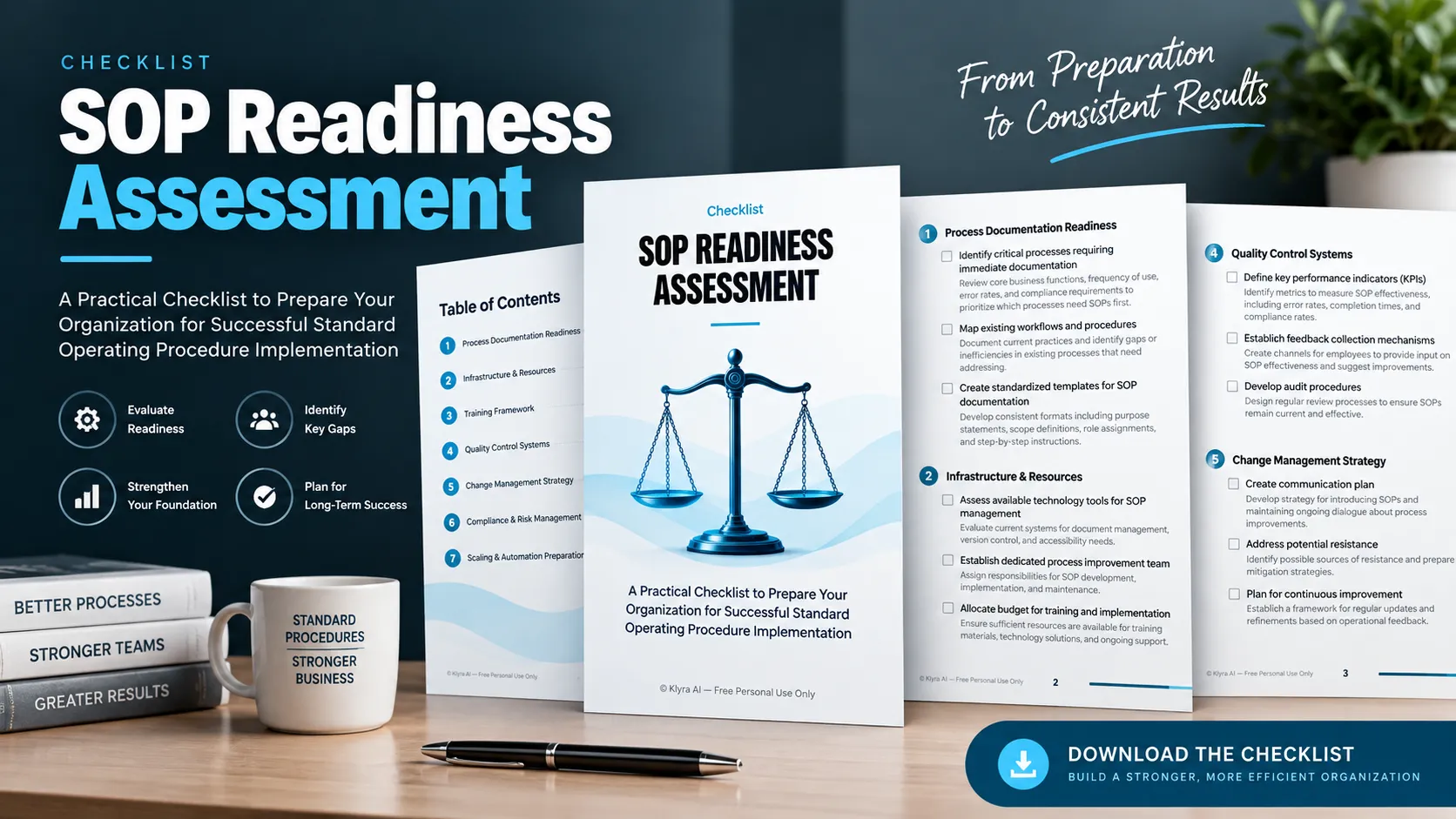
Vorschau

Take a Look Inside

See a preview of the resource before you download the complete guide.

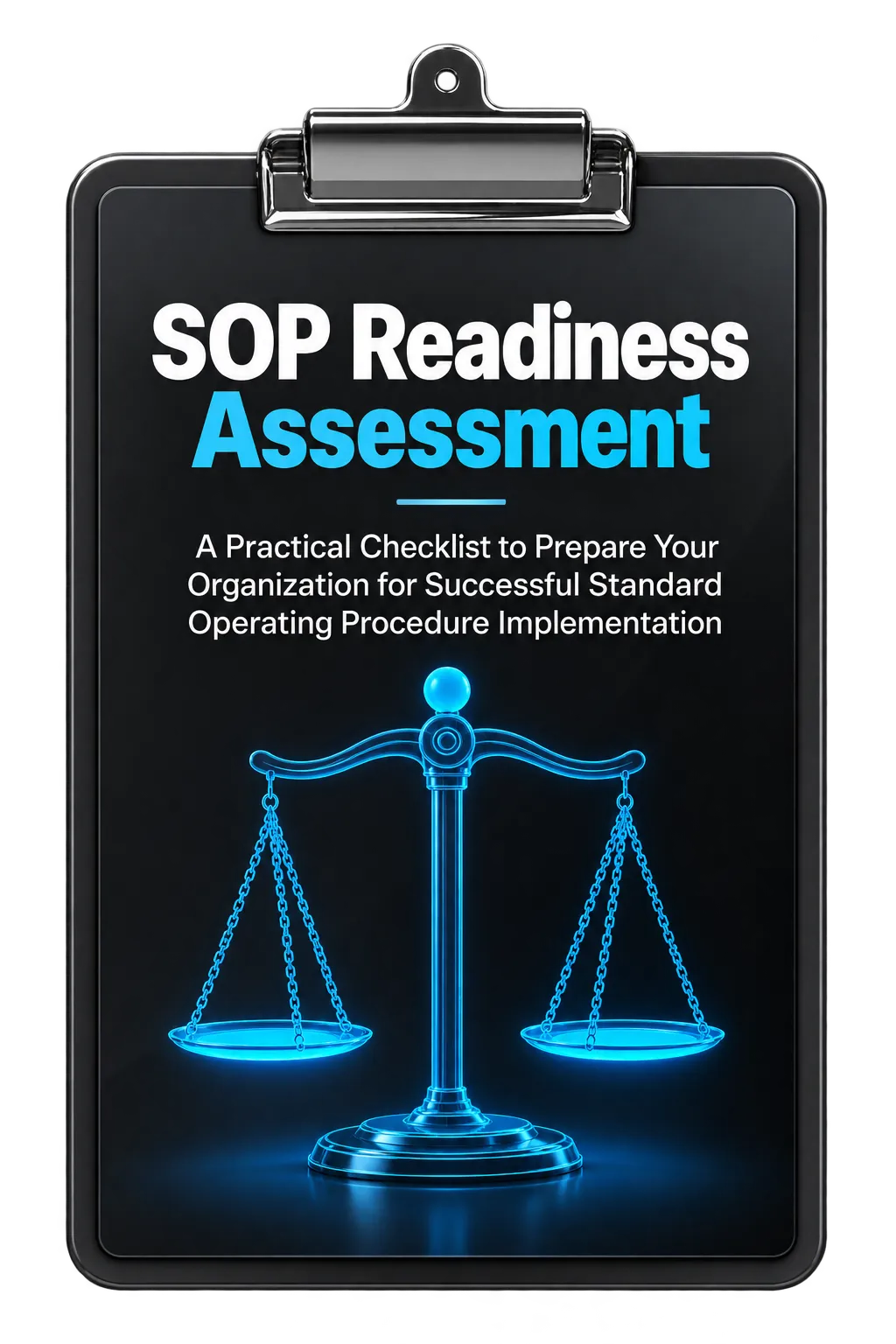
Preview of SOP Readiness Assessment
Take the Next Step

Ready to put it to use?

Download this resource and use the ideas, guidance, and insights inside to take the next step.

Keep Exploring

Related Resources

Explore more resources from this category.