A Practical Quality Control Process for New SOPs
A Standard Operating Procedure should be reviewed before it is implemented. The purpose of quality control is to verify that the documentation is complete, clear, effective, and ready for people to follow in practice.
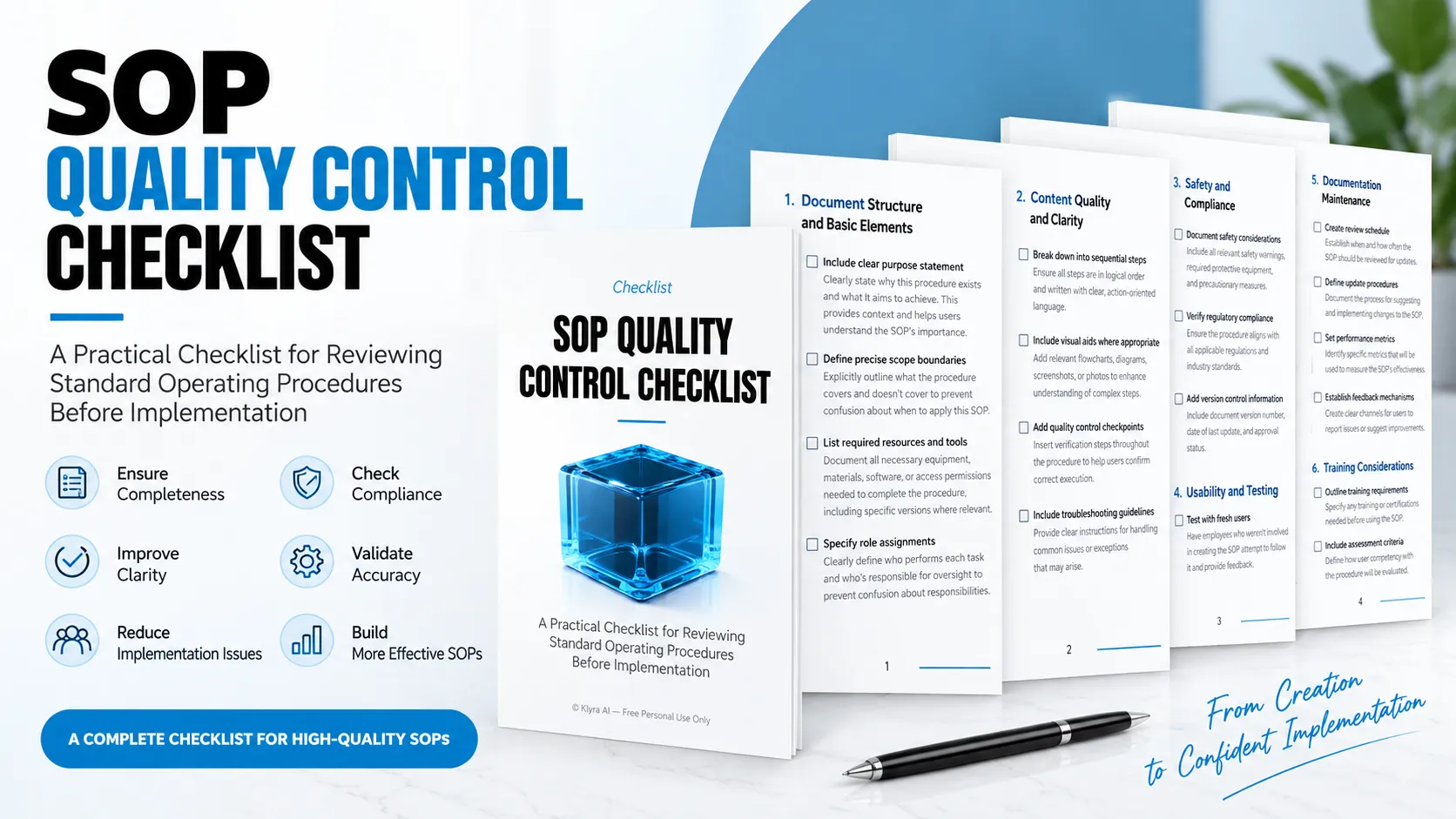
This checklist organizes that review into six areas: document structure, content quality, safety and compliance, usability and testing, ongoing maintenance, and training.
1. Establish the SOP's Structure and Basic Elements
Quality control begins with the foundations of the document. Before reviewing individual instructions, confirm that users have enough context to understand what the procedure is for, when it applies, what they need, and who is responsible.
Define the purpose
Include a clear purpose statement explaining why the procedure exists and what it is intended to achieve. This gives users context and helps them understand the importance of the SOP.
Set precise scope boundaries
Clearly identify what the procedure covers and what it does not cover. Precise boundaries help prevent confusion about when the SOP should be applied.
Identify required resources and tools
Document the equipment, materials, software, and access permissions required to complete the procedure. Where relevant, include specific versions.
Assign responsibilities
Specify who performs each task and who is responsible for oversight. Clear role assignments reduce uncertainty about responsibilities during execution.
2. Review Content Quality and Clarity
Once the basic structure is established, review whether someone can actually follow the procedure correctly. The instructions should be logical, understandable, and supported by appropriate verification and troubleshooting guidance.
Put steps in a logical sequence
Break the procedure into sequential steps and use clear, action-oriented language. Each step should appear in the order required to complete the procedure.
Use visual aids where appropriate
Flowcharts, diagrams, screenshots, and photos can be included when they help users understand complex steps more clearly.
Add quality control checkpoints
Include verification steps throughout the procedure so users can confirm that tasks have been executed correctly rather than waiting until the entire process is complete.
Prepare for common issues
Include troubleshooting guidance that explains how users should handle common problems or exceptions that may arise while following the SOP.
3. Check Safety, Compliance, and Document Control
An SOP review should also consider the requirements that affect safe, compliant, and controlled execution of the procedure.
Document relevant safety considerations
Include applicable safety warnings, required protective equipment, and precautionary measures.
Verify applicable compliance requirements
Confirm that the procedure aligns with applicable regulations and industry standards.
Include version control information
The SOP should identify its document version number, date of last update, and approval status. This helps users understand which version of the procedure they are following.
4. Test the SOP Before Implementation
Documentation can appear clear to its author while still creating uncertainty for someone encountering the procedure for the first time. Testing helps identify these issues before implementation.
Test with fresh users
Ask employees who were not involved in creating the SOP to attempt to follow it and provide feedback. Their experience can reveal instructions or assumptions that may not be clear to a new user.
Verify completion times
Document expected time frames for completing each major section of the procedure. This gives users a clearer understanding of the expected execution time.
Confirm technical accuracy
Have subject matter experts review and verify the technical information contained in the SOP before it is implemented.
5. Plan for Documentation Maintenance
An SOP needs a defined process for remaining useful after its initial implementation. Quality control therefore includes establishing how the document will be reviewed, updated, measured, and improved.
Create a review schedule
Establish when the SOP should be reviewed and how frequently reviews should occur so necessary updates are not overlooked.
Define how changes are made
Document the process for suggesting and implementing changes to the SOP. This creates a clear route for improving the procedure when updates are needed.
Set performance metrics
Identify specific metrics that will be used to measure the effectiveness of the SOP.
Create feedback mechanisms
Provide clear channels through which users can report problems or suggest improvements. Feedback from the people using the procedure can inform future revisions.
6. Address Training and Competency
The final area of the checklist considers whether users need preparation before following the SOP and how their ability to perform the procedure will be evaluated.
Outline training requirements
Specify any training or certifications that users need before they begin using the SOP.
Define assessment criteria
Establish how competency with the procedure will be evaluated. This provides a defined way to determine whether users are prepared to carry out the documented process.
Use the Checklist Before an SOP Goes Into Use
The complete checklist provides a structured review covering the lifecycle of a new SOP, from its purpose and scope through testing, maintenance, and user competency.
Use the downloadable checklist to work through each quality-control item before implementation and identify areas of the SOP that may require clarification, verification, or further preparation.