Is Your Content Workflow Creating Unnecessary Friction?
Content problems do not always begin with a lack of ideas or effort. Sometimes the workflow itself becomes the constraint.
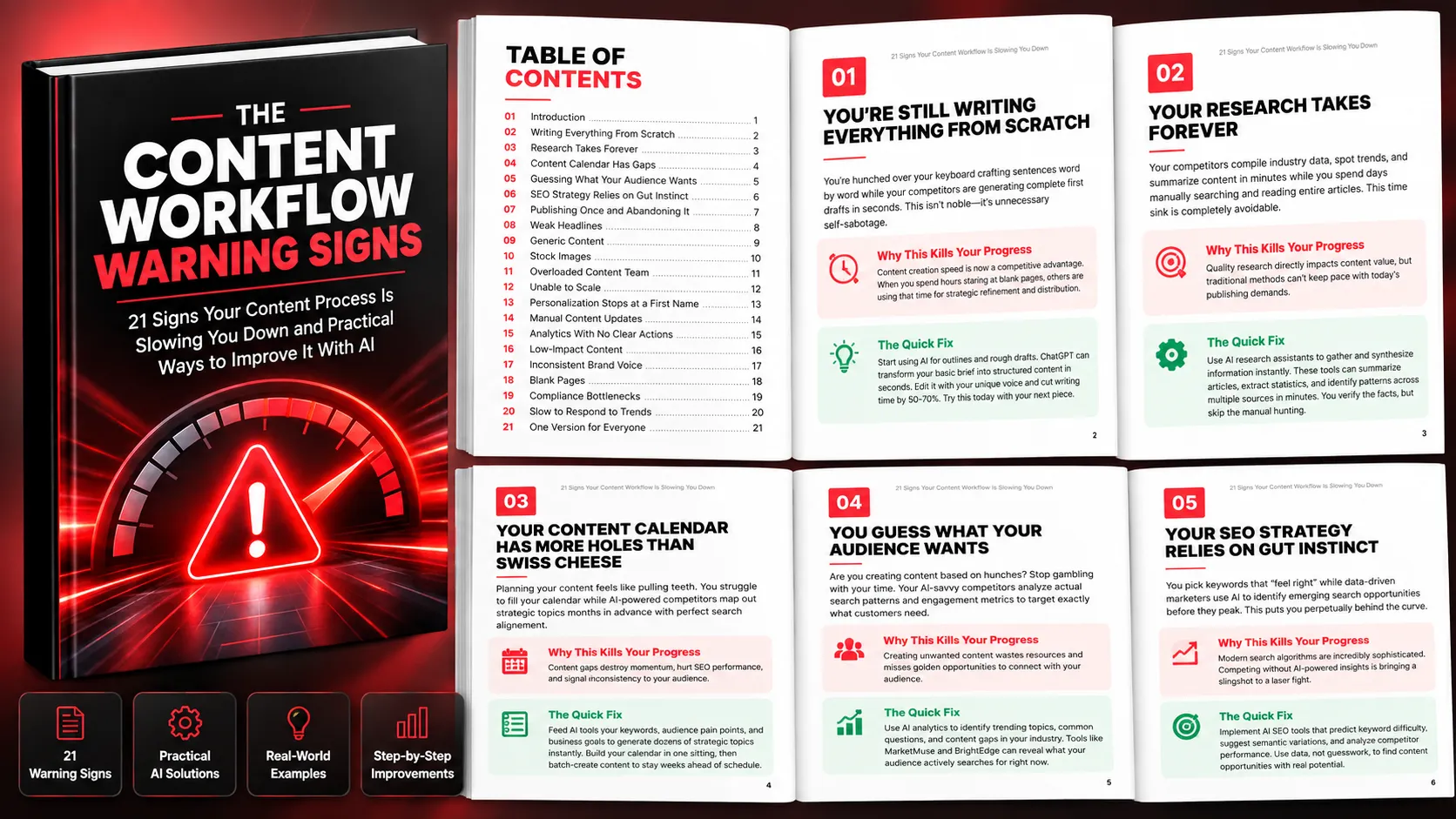
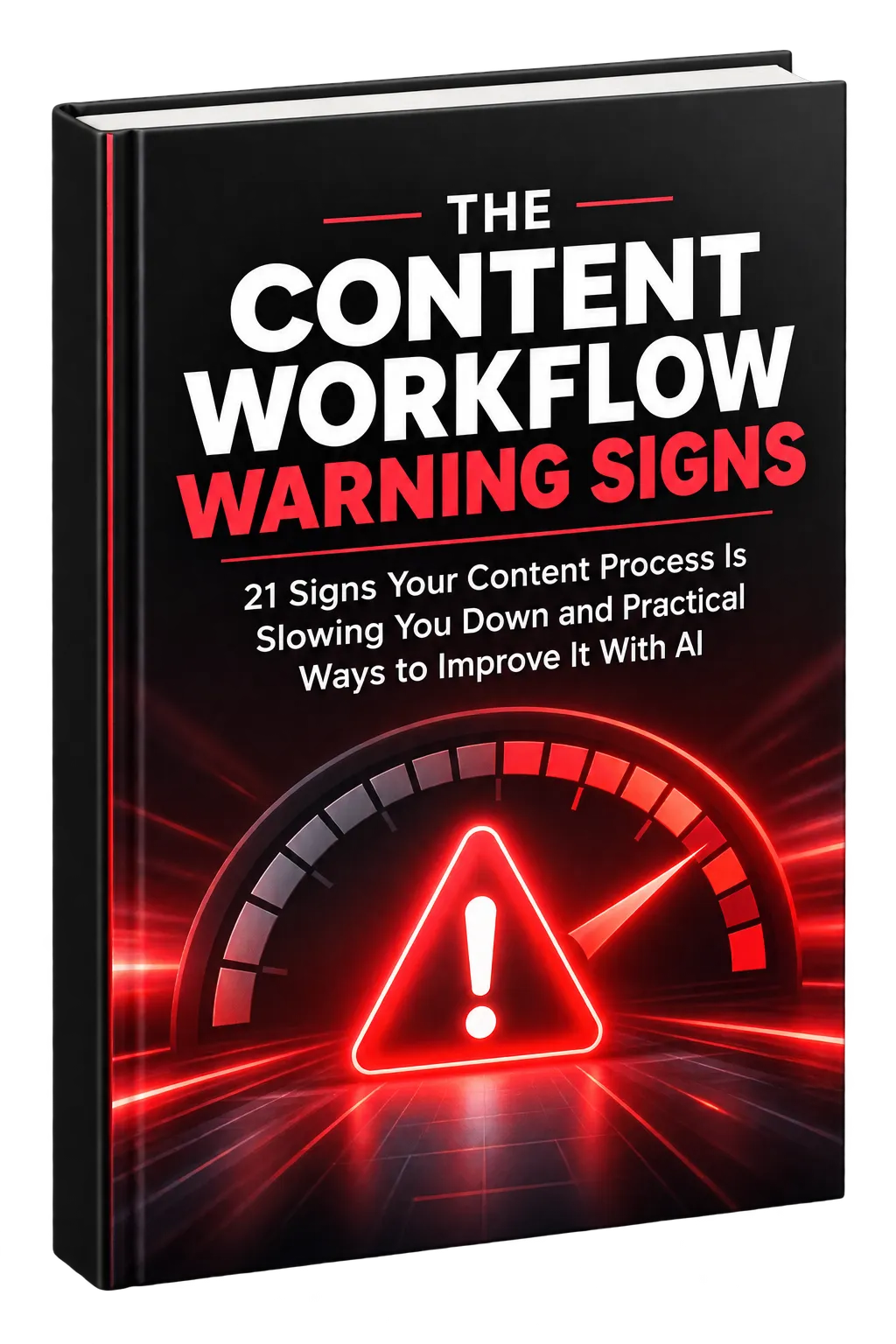
This resource identifies 21 signs that content operations may be relying too heavily on manual processes. It examines where AI can assist with repetitive, time-consuming, analytical, or adaptation-heavy work while people continue to contribute judgment, verification, creativity, and perspective.
The purpose is not to change everything at once. It is to recognize the areas creating the greatest friction and begin improving them systematically.
1. You Are Still Writing Everything From Scratch
Starting every piece word by word can consume time that could otherwise be used for refinement and distribution. The resource recommends using AI to create outlines and rough drafts, then editing the output with your own voice.
2. Your Research Takes Too Long
Research quality affects content quality, but manually searching for and reading every source can slow production. AI research assistants can help gather and synthesize information, summarize articles, extract statistics, and identify patterns across sources.
The guide still assigns an important responsibility to the person creating the content: verify the facts rather than treating AI output as automatically correct.
3. Your Content Calendar Is Full of Gaps
Inconsistent planning can interrupt publishing momentum. The resource recommends providing AI tools with inputs such as keywords, audience pain points, and business goals to generate potential topics, then building a content calendar and using batch production to stay ahead.
4. You Guess What Your Audience Wants
Creating content primarily from hunches can result in resources being spent on subjects the audience does not need. The guide recommends using analytics and AI-assisted analysis to identify trending topics, recurring questions, search patterns, engagement signals, and content gaps.
5. Your SEO Strategy Relies on Gut Instinct
Keyword selection and SEO decisions can benefit from data rather than intuition alone. The resource recommends AI-assisted SEO tools for activities such as evaluating keyword difficulty, finding semantic variations, and analyzing competitor performance.
6. You Publish Content Once and Abandon It
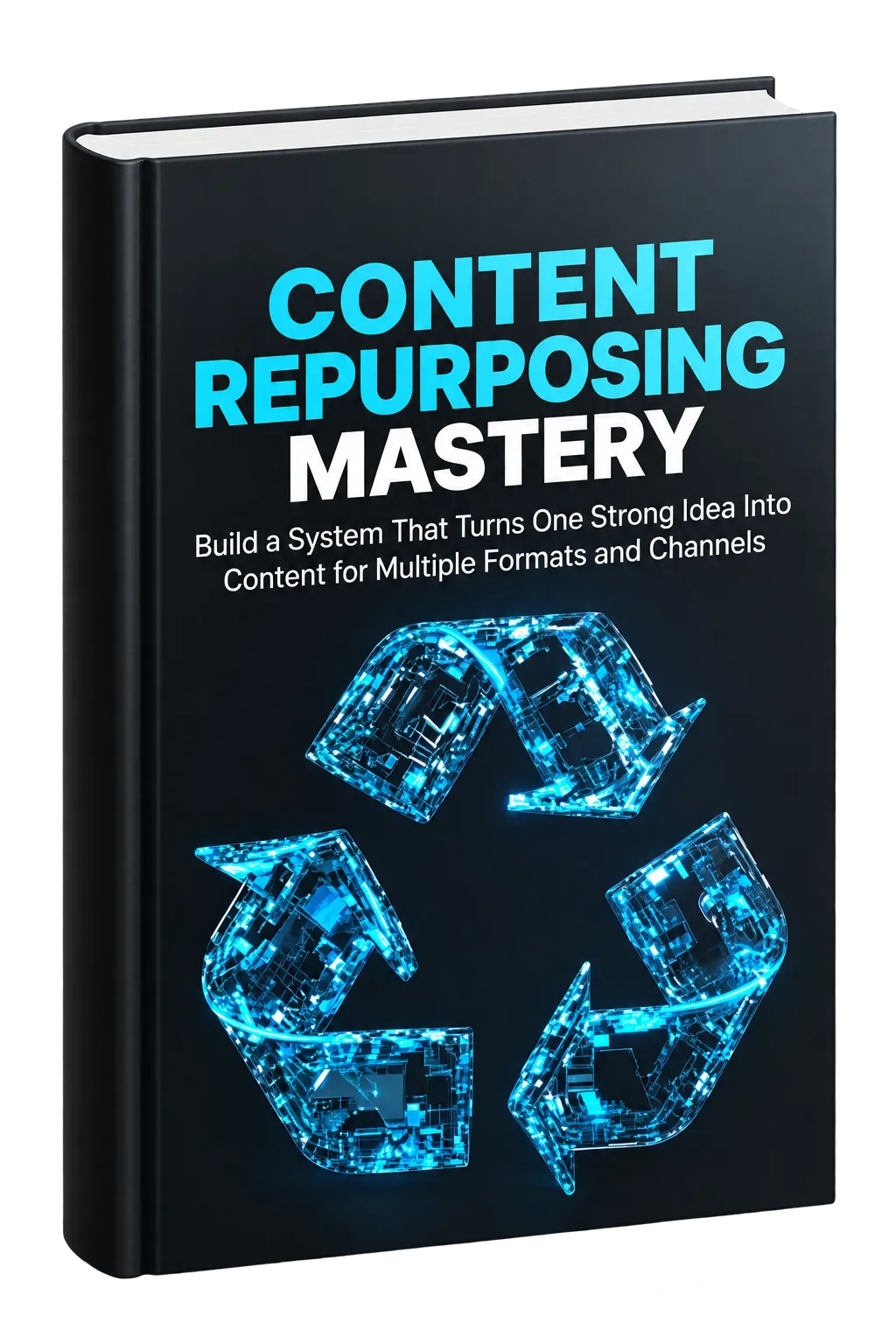
A substantial piece of content can support more than one format or distribution channel. Instead of treating an article as a single-use asset, the guide recommends adapting it into formats such as social content, newsletters, podcast scripts, and video scripts.
7. Your Headlines Receive Too Little Attention
The headline can determine whether useful content gets clicked or ignored. The resource recommends generating multiple headline variations and analyzing alternative approaches rather than treating the first headline as final.
8. Your Content Sounds Like Everyone Else
Generic content can struggle to differentiate itself in a saturated environment. AI-assisted content analysis can be used to compare planned material with existing content and identify unexplored subtopics, gaps, or alternative perspectives.
9. You Depend on Generic Stock Images
The resource recommends considering text-to-image AI when generic stock photography does not adequately match the message. Custom visuals can be developed around the specific content and relevant brand guidelines instead of settling for an approximate stock image.
10. Your Content Team Is Overloaded
When a team handles every repetitive task manually, deadlines and workload can become difficult to manage. The guide recommends auditing the workflow to identify routine activities suitable for AI assistance.
Examples provided include research summaries, meta descriptions, and first drafts, allowing team members to focus more attention on higher-value creative work.
11. You Cannot Scale Beyond Your Current Output
Increasing content requirements can expose the limitations of purely manual workflows. The resource proposes AI-enhanced templates and standardized workflows for repetitive elements as a way to increase production capacity while maintaining defined processes.
12. Your Personalization Stops at a First Name
The guide distinguishes basic field insertion from more extensive content personalization. AI-powered dynamic content systems can adapt sections, recommendations, calls-to-action, and messaging using factors such as industry, behavior, and buyer journey position.
13. Updating Existing Content Is a Manual Burden
Older content can become less useful when information becomes outdated, links stop working, or search patterns change. The resource recommends monitoring existing content for signals that indicate a refresh may be needed.
AI-assisted monitoring can help identify outdated information and performance declines while flagging more substantial revisions for human attention.
14. You Are Ignoring Global Audiences
Publishing in only one language can restrict the audiences that content can reach. The guide recommends AI-assisted translation and localization that considers cultural nuance and context rather than relying solely on literal word-for-word conversion.
15. Your Analytics Produce Data Without Clear Actions
Collecting performance metrics is not the same as knowing what to do with them. AI-assisted analytics can help interpret patterns across a content library and translate raw performance information into more specific recommendations, such as adjustments to topics or formats.
16. You Spend Resources on Low-Impact Content
Not every potential topic deserves the same investment. The resource recommends evaluating content opportunities using factors such as audience demand, competitive opportunity, and conversion potential so limited resources can be directed toward stronger opportunities.
17. Your Brand Voice Is Inconsistent
A fragmented tone across channels can weaken consistency. The guide recommends using AI writing assistants with established brand voice and style guidelines to review content before publication and suggest changes when the writing moves away from the intended voice.
18. Blank Pages Keep Slowing You Down
Starting from nothing can create unnecessary friction. The resource recommends using AI as a brainstorming partner for outlines, introductions, and possible angles, creating a structured starting point that can then be refined by the writer.
19. Compliance Reviews Create Bottlenecks
Manual compliance checks can add time to the publishing process. The guide recommends using AI-assisted scanning to identify potential regulatory issues, sensitive language, and guideline violations before human review.
This positions automated checking as an earlier screening layer rather than eliminating the need for human attention.
20. You Cannot Respond Quickly to Trending Topics
Some content opportunities are time-sensitive. If the production process takes too long, the conversation may have moved on before the content is ready.
The resource proposes an AI-assisted rapid-response workflow in which emerging industry trends are monitored, AI supports research and drafting, and people contribute original insights and perspective.
21. One Version of Your Content Has to Serve Everyone
Generic content may not address the needs of different personas, industries, or stages of awareness equally well. AI-assisted adaptation can create variations of core content while preserving its central message.
The guide suggests adapting elements such as terminology, examples, and emphasis according to the audience or funnel stage rather than recreating every piece manually.
Turn the 21 Warning Signs Into a Workflow Audit
Taken together, the warning signs cover much of the content lifecycle: research, planning, ideation, writing, SEO, visual creation, repurposing, personalization, localization, analytics, optimization, compliance, and distribution.
The resource does not recommend implementing every possible change immediately. Instead, identify the warning signs that most closely reflect your current workflow and begin with one relevant improvement.
A Simple Starting Process
- Review the 21 warning signs and identify the problems that apply to your current content process.
- Select one area where AI assistance could reduce unnecessary manual work.
- Implement one relevant solution.
- Track the time saved and the results produced.
- Use what you learn to determine where AI assistance should be introduced next.
This incremental approach turns the resource from a list of problems into a practical content workflow assessment. Download the complete resource for all 21 warning signs, explanations, and quick fixes in their original format.