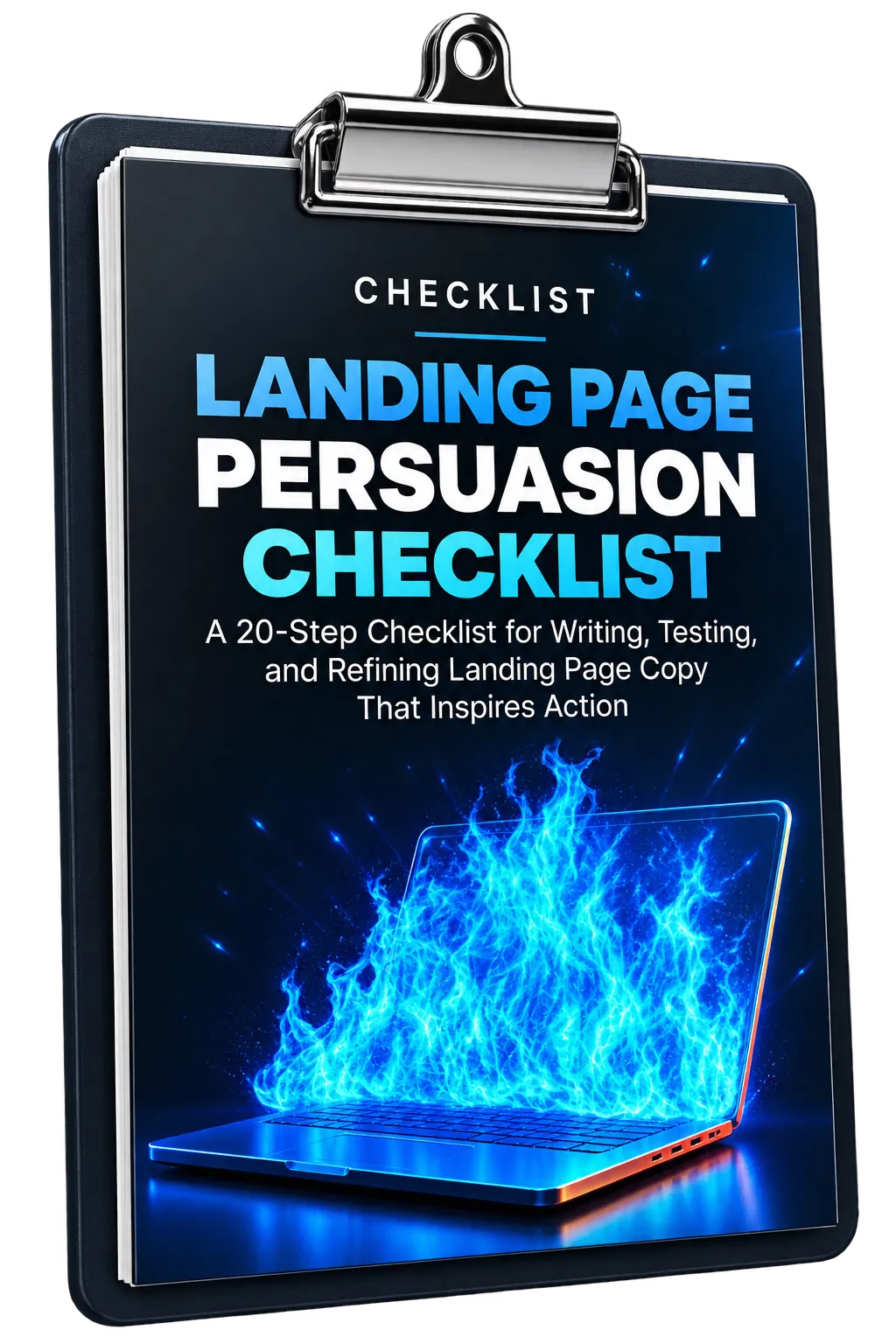
A Practical Checklist for Landing Page Copy
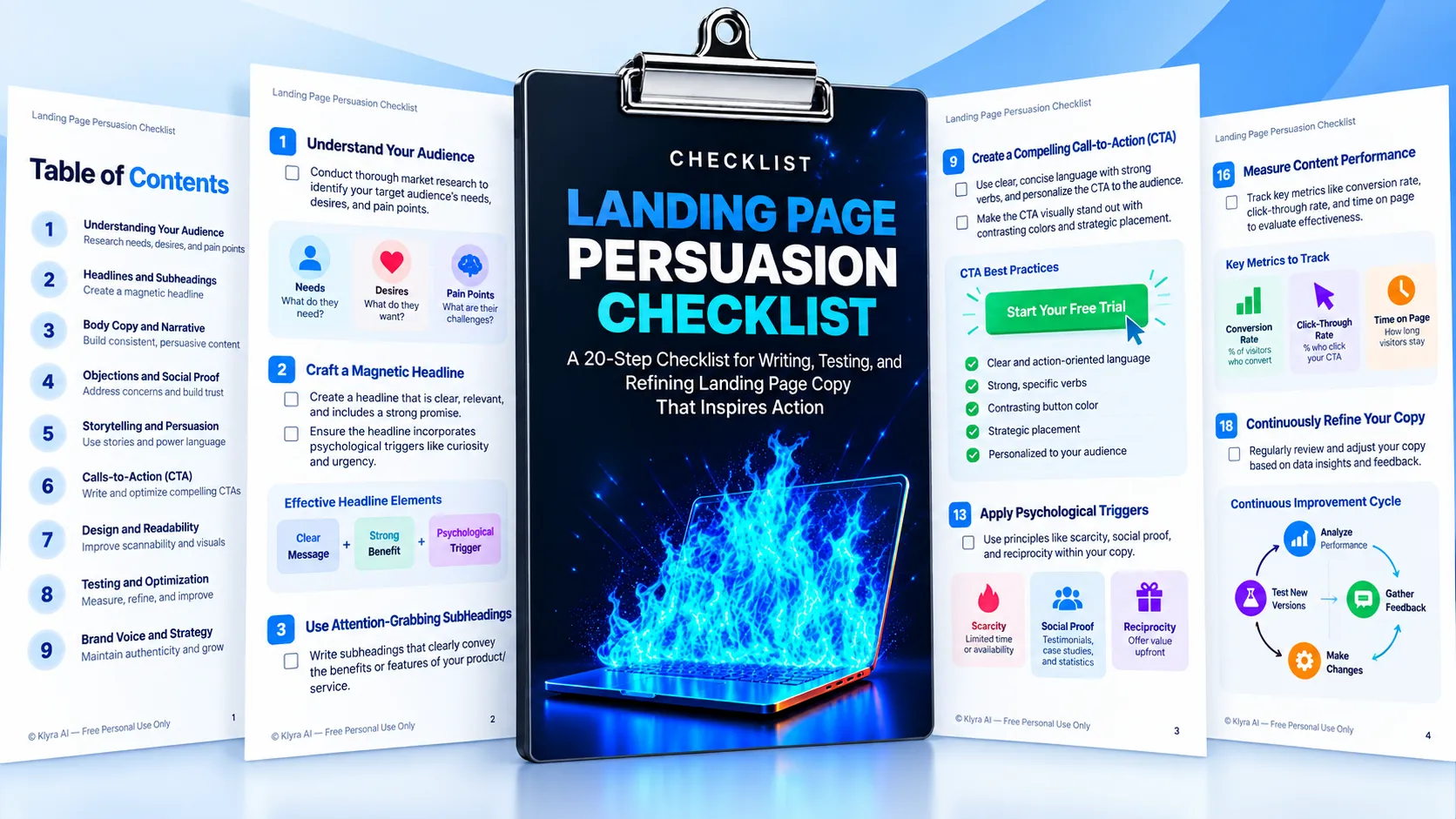
Landing page persuasion involves multiple elements working together. Understanding the audience, writing the headline, developing the supporting message, addressing objections, creating the CTA, and measuring performance all contribute to the final experience.
The Landing Page Persuasion Checklist organizes these considerations into 20 actionable steps. It can be used as a review process for landing page copy, helping you move systematically from audience understanding and message development to testing, measurement, and continued refinement.
1. Start With the Audience
Understand Your Audience
Conduct market research to identify the needs, desires, and pain points of your target audience. This gives the rest of the landing page a clearer foundation because the message can be developed around the people it needs to reach.
2. Build a Strong Message Hierarchy
Craft a Magnetic Headline
Create a headline that is clear, relevant, and contains a strong promise. The checklist also recommends considering psychological triggers such as curiosity and urgency.
Use Attention-Grabbing Subheadings
Use subheadings to communicate important benefits or features of the product or service. They should help visitors understand the page as they move through the content.
Develop Narrative Consistency
Keep the body content aligned with the promises made in the headline and call-to-action. The different parts of the landing page should reinforce the same overall message rather than creating conflicting expectations.
3. Strengthen Trust and Persuasion
Address Objections Proactively
Identify common objections visitors may have and address them directly in the copy. Provide evidence where it is needed to support the response.
Incorporate Social Proof
Use appropriate testimonials, case studies, and statistics to help build credibility and trust.
Leverage Storytelling
Develop relatable stories that illustrate the transformation offered by the product or service. Storytelling can help connect the offer with an outcome the visitor can understand.
Use Persuasive Language
Use active voice, power words, and benefit-focused language to communicate value effectively. The emphasis should remain on making the value of the offer clear to the audience.
4. Create a Clear Call-to-Action
Write a Compelling CTA
Use clear and concise language with strong verbs. The checklist also recommends personalizing the CTA to the audience rather than relying entirely on generic action language.
Make the CTA Visually Stand Out
The CTA is not only a copywriting element. Its visual presentation also matters. Use contrasting colors and strategic placement so the CTA is easy for visitors to identify.
5. Make the Page Easier to Consume
Optimize for Scannability
Use bullet points, short paragraphs, and subheadings to improve readability. These structural elements make it easier for visitors to scan the page and locate important information.
Integrate Visual Elements
Support the written message with high-quality images or videos where appropriate. Visual elements should reinforce the message rather than operate independently from the copy.
6. Apply Persuasion Principles Carefully
Use Psychological Triggers
The checklist identifies scarcity, social proof, and reciprocity as psychological principles that can be incorporated into landing page copy.
Maintain Authenticity and Transparency
Persuasive techniques should be balanced with honesty. Be upfront about the capabilities of the product and any relevant terms or conditions.
This makes authenticity and transparency part of the persuasion process rather than treating them as separate concerns.
7. Test Headlines and Calls-to-Action
Use A/B Testing
Do not treat the first version of a headline or CTA as automatically final. Conduct A/B tests to compare alternatives and determine which versions are more effective.
Testing provides a structured way to evaluate changes rather than relying entirely on assumptions about what visitors will prefer.
8. Measure Landing Page Performance
The checklist identifies three metrics to track when evaluating content effectiveness:
- Conversion rate
- Click-through rate
- Time on page
Measurement connects the writing process with actual performance. These insights can then inform later revisions to the page.
9. Treat Optimization as an Ongoing Process
Stay Updated on Industry Trends
Keep informed about emerging technologies and changing consumer behaviors so your approach can continue to evolve.
Continuously Refine Your Copy
Regularly review and adjust landing page copy using data insights and feedback. Optimization should continue after the initial page has been created and tested.
Cultivate a Unique Brand Voice
Develop a consistent tone and style that aligns with the brand and resonates with the audience. Persuasive landing page copy should still sound like the organization communicating it.
Review and Reflect on Your Strategy
Periodically examine both successes and areas that need improvement. Use what you learn to strengthen future campaigns rather than treating each landing page as an isolated project.
Use the Checklist Before Your Landing Page Goes Live
The complete checklist brings these considerations together into 20 actionable items that can be reviewed one by one. It covers the process from audience research and initial messaging through CTA development, psychological principles, readability, testing, performance measurement, brand voice, and continued optimization.
Download the Landing Page Persuasion Checklist and use it as a practical review tool when creating a new landing page or evaluating existing copy.