What Makes Long-Form Content Valuable?
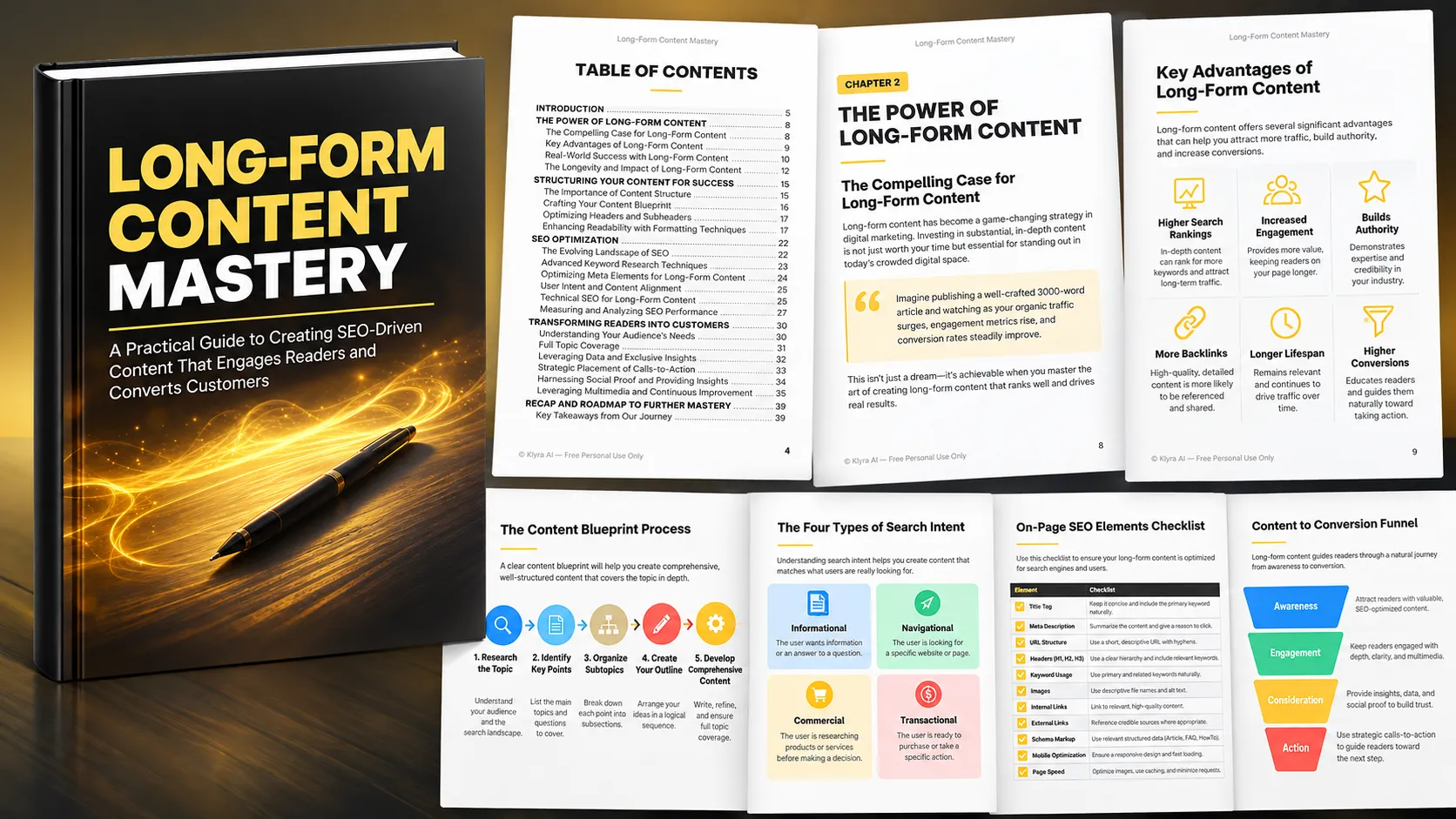
Long-form content is not simply content with a high word count. Its value comes from giving a subject enough depth to answer readers' questions, provide useful guidance, and address the topic comprehensively.
When an in-depth resource is well researched and genuinely useful, it can support several objectives at once. It can attract organic traffic, encourage deeper engagement, earn backlinks and shares, demonstrate expertise, and give readers actionable information they can use.
The guide emphasizes an important principle: quality matters more than length. Adding words without adding value does not create effective long-form content. Every section should contribute to the reader's understanding or help them take meaningful action.
Start With Research and a Content Blueprint
Strong long-form content begins before the writing itself. Start by identifying the main topic and the important points that need to be covered. Break those points into subtopics and supporting details to create a comprehensive outline.
This outline becomes the content blueprint. It helps maintain a logical sequence, prevents important parts of the subject from being overlooked, and makes a substantial piece easier to develop.
Build a Clear Information Hierarchy
Headers and subheaders act as signposts. They help readers understand where they are, scan for information, and move through a long page without becoming lost.
Use a logical hierarchy in which the main title establishes the subject, major sections address the principal topics, and subsections explain supporting ideas. Headers should accurately describe the material that follows and incorporate relevant keywords naturally rather than forcing them into the page.
Make Long Content Easy to Read
Depth should not come at the expense of readability. Break substantial information into manageable sections and use formatting where it genuinely improves comprehension.
- Use short paragraphs to make dense information easier to consume.
- Use bullet points and numbered lists for grouped information and processes.
- Use bold or italic text selectively to emphasize important ideas.
- Use tables when readers need to compare information.
- Use images, charts, and infographics when they clarify complex concepts.
- Use descriptive internal links to connect readers with relevant supporting content.
Introductions and conclusions also have distinct jobs. An introduction should capture attention, establish the purpose of the content, explain what readers will gain, and preview what will be covered. A conclusion should reinforce the main lessons and provide appropriate next steps.
Build Long-Form Content Around Search Intent
Modern SEO requires more than placing keywords throughout a page. The resource emphasizes relevance, context, content quality, and the ability to satisfy the reason behind a user's search.
Before developing a long-form page, determine the intent associated with the target query. The guide identifies four broad forms of search intent:
- Informational: the user wants information or an answer.
- Navigational: the user is looking for a particular website or page.
- Commercial: the user is researching products or services before making a decision.
- Transactional: the user is prepared to purchase or take a specific action.
Analyze the search results associated with the target keywords, determine the dominant intent, and structure the resource so that it comprehensively addresses that need.
Use Long-Tail Keywords and Semantic Coverage
Long-tail keywords are more specific phrases that can help attract highly targeted visitors. Instead of relying only on broad keywords, long-form content provides room to address narrower questions and related searches naturally.
Semantic optimization expands this approach beyond exact-match keywords. Use related terminology and synonyms, answer questions the audience is likely to ask, cover the subject comprehensively, and write in natural language.
Connect Related Content Through Topic Clusters
The guide describes topic clusters as a way to organize related content around a central pillar page. A broad subject becomes the pillar, while detailed pieces explore relevant subtopics. Linking between the pillar and its supporting content helps create a clearer relationship between pages.
Internal links should use descriptive anchor text and point to genuinely relevant resources. The purpose is not simply to create more links, but to help readers discover useful supporting information and create a coherent site structure.
Optimize the Search Experience
Long-form content also depends on the elements surrounding the main copy. Titles, descriptions, URLs, images, structured data, mobile usability, and page performance all contribute to how the content can be discovered and consumed.
Optimize Meta Elements
The guide recommends keeping meta titles concise, placing the primary keyword naturally near the beginning, and accurately representing the content. Meta descriptions should summarize what the page offers while giving searchers a reason to visit.
URLs should remain short and descriptive, use hyphens between words, and avoid unnecessary words. Images should use descriptive file names and alt text while being optimized for performance.
Consider Technical SEO
Technical performance can affect the experience of consuming substantial content. The resource recommends practices such as image compression, browser caching, minimizing unnecessary page requests, responsive design, and mobile-friendly multimedia.
Structured data can also help search engines interpret the nature of a page. Depending on the content, the guide discusses Article, FAQ, HowTo, and Review schema as possible formats.
Create for the Audience Before the Conversion
Conversion-focused content starts with understanding the audience. Research their problems, goals, interests, and preferred forms of content before deciding what to write or how to present it.
The resource recommends using methods such as surveys, customer interviews, social media listening, website analytics, and buyer personas to develop a clearer picture of the people the content needs to serve.
Cover the Topic in Meaningful Depth
Comprehensive content should move beyond surface-level advice. Research the subject using relevant sources and examples, explore important subtopics, and look for insights that provide readers with something useful rather than repeating generic recommendations.
For each major concept, ask a practical question: How can the reader implement this? Where appropriate, translate ideas into processes, checklists, examples, or specific actions.
Strengthen Content With Data and Supporting Evidence
Original research, surveys, expert perspectives, case studies, and relevant data can increase the usefulness and credibility of long-form content. When data is complex, charts and infographics can make it easier to understand while creating additional opportunities for engagement and sharing.
Guide Readers Toward the Next Step
Useful content and conversion do not need to compete. The guide recommends balancing informative material with persuasive elements that naturally help readers move toward an appropriate next action.
Calls-to-action should therefore reflect where readers are in the content rather than appearing only at the end. A softer action can appear earlier, a more relevant offer can follow the explanation of a particular challenge, and a stronger primary action can appear once the reader has received enough information to understand its relevance.
Social proof can reinforce this process. Relevant testimonials, customer examples, expert perspectives, usage information, and other credible evidence can help readers evaluate the ideas and solutions being presented.
Use Multimedia to Improve the Experience
Long-form content does not have to consist entirely of text. Multimedia can make complex material easier to understand and support different ways of learning.
The resource suggests using elements such as infographics, short video tutorials, interactive tools, quizzes, calculators, podcasts, or audio versions when they genuinely improve the content experience.
Measure, Update, and Improve
Publishing is not the end of the long-form content process. Performance should be measured and the content refined using evidence from actual reader behavior.
Important metrics discussed in the guide include:
- Organic traffic
- Keyword rankings
- Time on page
- Bounce rate
- Scroll depth
- Backlinks
- Social shares
- Internal-link and CTA click-through rates
- Conversion rates
Analytics can reveal where readers disengage, which topics perform well, and whether calls-to-action are producing the desired response. Testing different headlines, structures, CTA placements, and other important elements can provide additional evidence for improvement.
The guide also recommends reviewing important long-form content regularly. Refresh outdated statistics and examples, incorporate relevant new information, and continue improving the resource as the subject and audience needs evolve.
Think of Long-Form Content as a Long-Term Asset
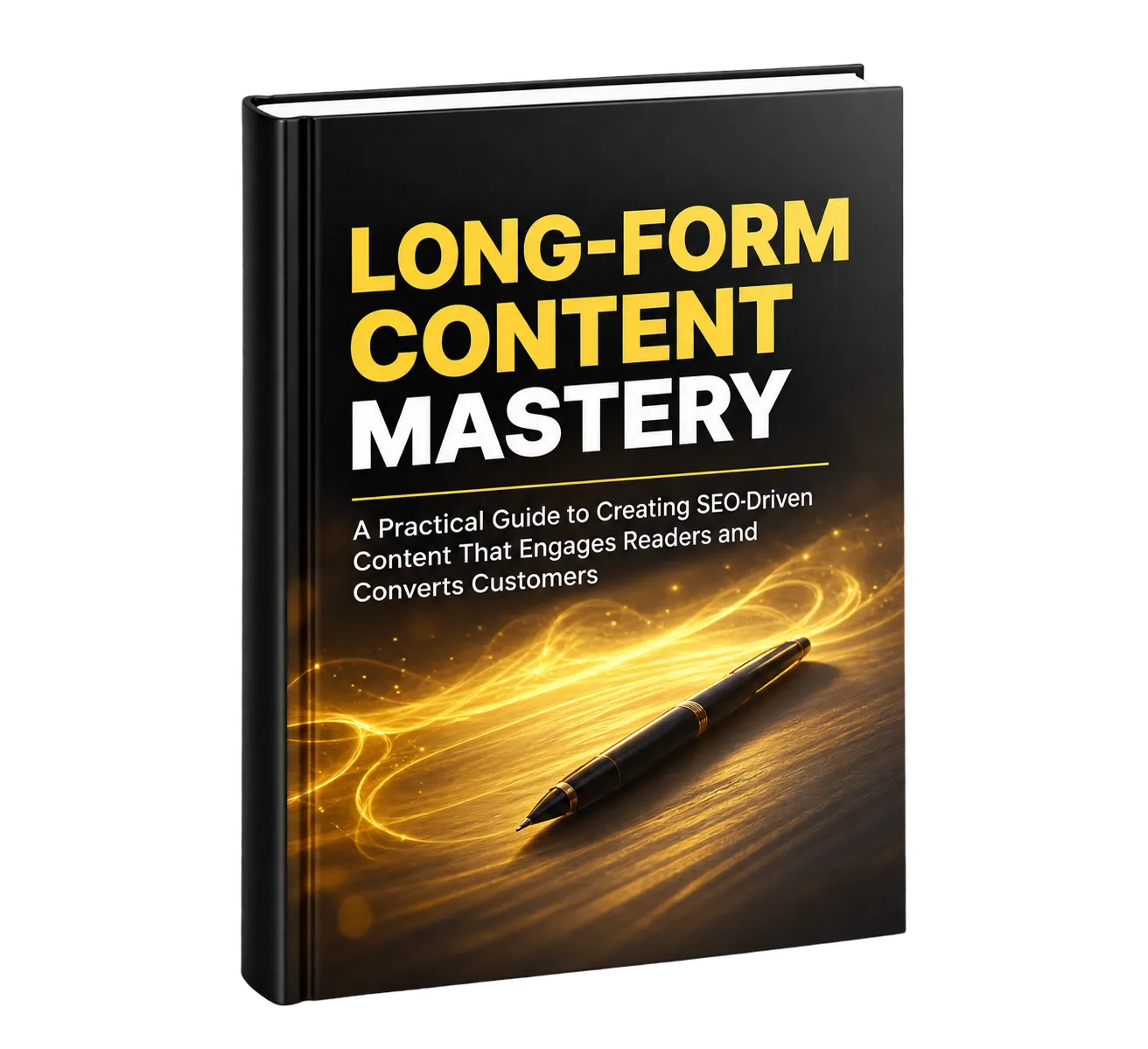
The central approach presented throughout Long-Form Content Mastery is strategic rather than volume-driven. Effective long-form content combines research, comprehensive coverage, clear structure, search optimization, audience understanding, useful guidance, and appropriate conversion opportunities.
It is also an ongoing discipline. Building authority through substantial content requires consistency, patience, measurement, experimentation, and continuous improvement.
The complete resource explores these areas in greater depth, including content architecture, keyword research, search intent, technical SEO, conversion strategy, social proof, multimedia, analytics, and practical approaches to refining long-form content over time.