A Practical System for TikTok Shop Content Creation
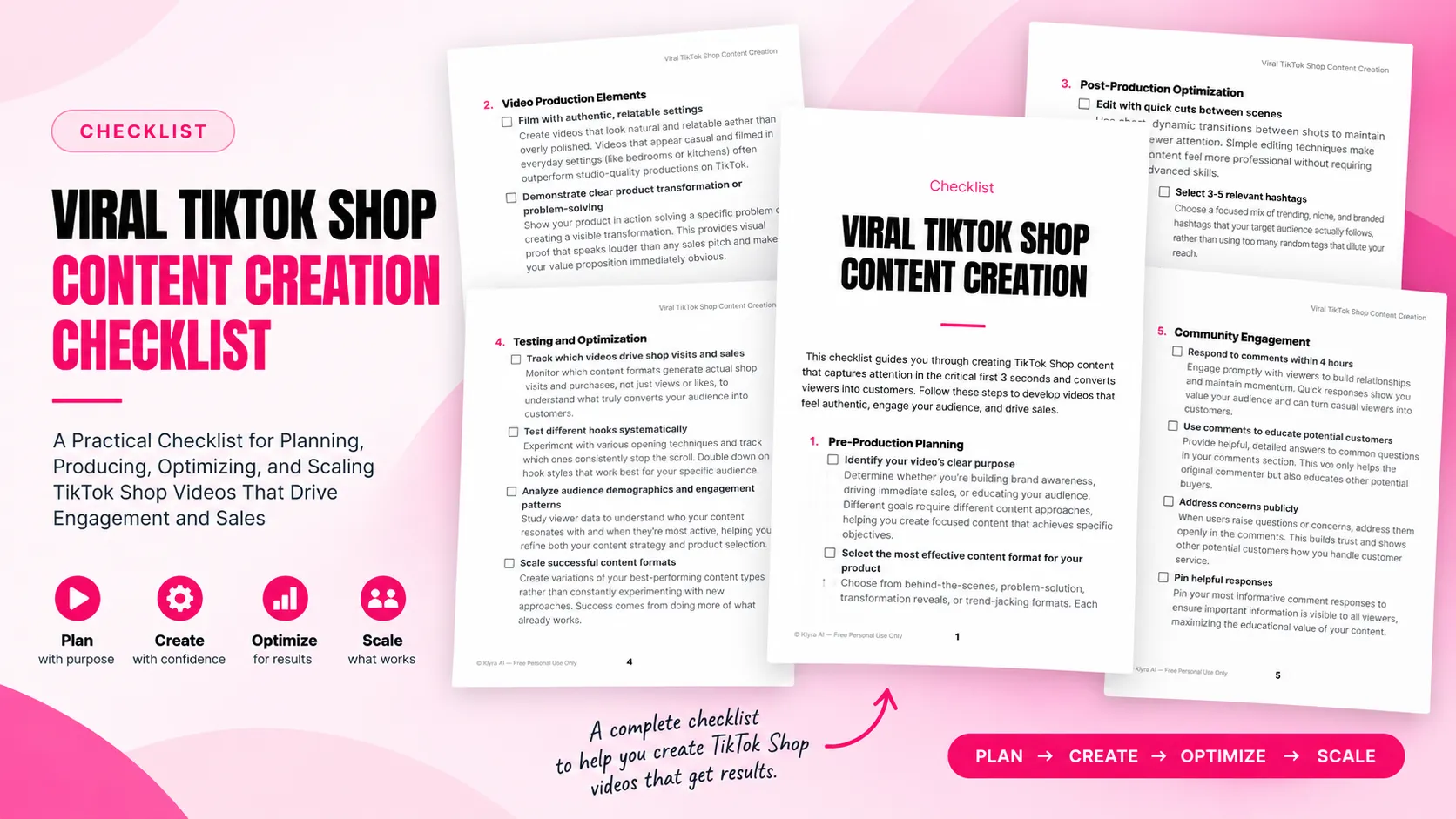
Effective TikTok Shop content starts before you press record and continues after the video has been published. The process covered in this checklist moves through five areas: pre-production planning, video production, post-production optimization, testing and optimization, and community building.
The objective is to create videos that capture attention quickly, demonstrate product value clearly, encourage a specific viewer action, and give you useful performance information for improving future content.
Start With a Clear Purpose
Before deciding what to film, determine what the video needs to accomplish. The checklist identifies three possible objectives: building brand awareness, driving immediate sales, or educating your audience.
These objectives require different approaches. Defining the purpose first gives the rest of the video a clear direction and helps prevent unfocused content.
Choose a Format That Fits the Product
The resource recommends considering several TikTok content formats, including:
- Behind-the-scenes content
- Problem-solution videos
- Transformation reveals
- Trend-jacking formats
Each format serves a different purpose. Problem-solution content can create urgency by connecting a product to a specific need, while transformation content can make the result of using a product visually apparent.
Win Attention in the First Three Seconds
The opening three seconds are a critical part of the video's plan. Instead of slowly introducing the subject, prepare an opening intended to stop the scroll immediately.
The checklist suggests using approaches such as surprising movement, an intriguing question, or a bold statement. The goal is to create immediate visual or emotional impact and give viewers a reason to continue watching.
Plan a Focused Video
The resource recommends scripting content around a 21 to 34 second timeframe. Within that window, the video should have enough room to attract attention, demonstrate value, and present a call to action without unnecessarily extending the message.
A useful planning sequence is therefore:
- Establish the video's purpose.
- Select an appropriate content format.
- Plan the first three seconds.
- Demonstrate the product's value.
- Finish with a clear next step.
Make the Product Value Visible
TikTok Shop content should show rather than simply tell. The checklist recommends demonstrating the product solving a specific problem or producing a visible transformation.
Showing the product in action gives viewers visual evidence of what it does and makes the value proposition easier to understand without relying entirely on a sales pitch.
Keep the Setting Authentic and Relatable
The resource favors natural, relatable production over unnecessarily polished presentation. Casual videos filmed in everyday environments, such as bedrooms or kitchens, can create the type of authentic presentation described in the checklist.
The goal is not to remove production quality entirely. It is to avoid allowing polish to make the content feel disconnected from the viewing experience the video is intended for.
Support the Message With Sound and Text
Trending sounds can be incorporated when they genuinely support the content. The checklist recommends choosing audio strategically rather than forcing a trend into a video where it does not belong.
Text overlays are equally important because viewers may encounter the video without sound. Strategic on-screen text should communicate the key message so that the content remains understandable in sound-off viewing situations.
Optimize Before Publishing
Post-production should maintain attention and make the intended action clear. The checklist recommends quick cuts between scenes to keep the video dynamic without requiring advanced editing techniques.
Use Focused Hashtags
Rather than filling a post with unrelated tags, select three to five relevant hashtags. The resource recommends a focused combination of trending, niche, and branded hashtags that are relevant to the intended audience.
Give Viewers a Clear Next Step
Every video should have a clear call to action. Depending on the purpose of the content, this might encourage viewers to visit the shop, leave a comment, or try a demonstrated technique.
The important principle is clarity. Viewers should understand what they are being invited to do after watching.
Schedule Around Your Audience
Posting decisions should be based on when your specific audience is most active. The checklist advises using analytics to identify those periods and notes that evenings and weekends are typical periods for many businesses.
Measure What Actually Drives Customers
Publishing is not the end of the process. The checklist recommends tracking which videos generate shop visits and purchases, rather than evaluating success only through views and likes.
This shifts attention toward content that contributes to the video's commercial objective and provides a clearer basis for future content decisions.
Test Your Hooks Systematically
Different opening techniques should be tested and compared. Track which hooks repeatedly capture attention with your particular audience, then use those findings to guide future videos.
This turns the opening of a video from a one-time creative decision into something that can be refined through repeated testing.
Study Audience Behavior
Analyze viewer demographics and engagement patterns to understand who responds to your content and when those viewers are most active. The resource recommends using this information to refine both content strategy and product selection.
Scale Formats That Already Work
Once a content type performs well, create variations of it rather than constantly replacing successful approaches with completely new experiments.
The checklist's approach is straightforward: identify what works for your audience, learn from it, and produce more variations of successful formats.
Turn Comments Into Part of the Content Strategy
Community engagement is treated as part of TikTok Shop content creation rather than an activity that happens separately after publishing.
The checklist recommends responding to comments within four hours, answering questions, acknowledging feedback, and engaging promptly with viewers.
Use Comments to Educate Potential Customers
A useful response can serve more people than the person who originally asked the question. Detailed answers can help other viewers understand the product, its benefits, or the issue being discussed.
Address Concerns Publicly
When viewers raise product questions or concerns, the resource recommends addressing them openly. This allows other potential buyers to see how questions and problems are handled and can help build trust around the product.
Pin Helpful Responses
Informative comment responses can be pinned so that new viewers encounter useful information more easily. This gives valuable answers greater visibility and extends the educational role of the comment section.
Use the Checklist as a Repeatable Workflow
The complete resource brings these practices together as a practical checklist you can use before recording, before publishing, and after a TikTok Shop video goes live.
Use the downloadable checklist to review your purpose, format, hook, production choices, optimization, performance testing, and community engagement as part of one repeatable content creation process.