Content Marketing for Small Businesses: A Practical Approach
Small businesses do not need the marketing budgets of large corporations to create useful content or build strong customer relationships. Their advantage is often much closer to home: direct contact with customers, knowledge of the local community, practical expertise, and authentic stories that larger companies cannot easily reproduce.
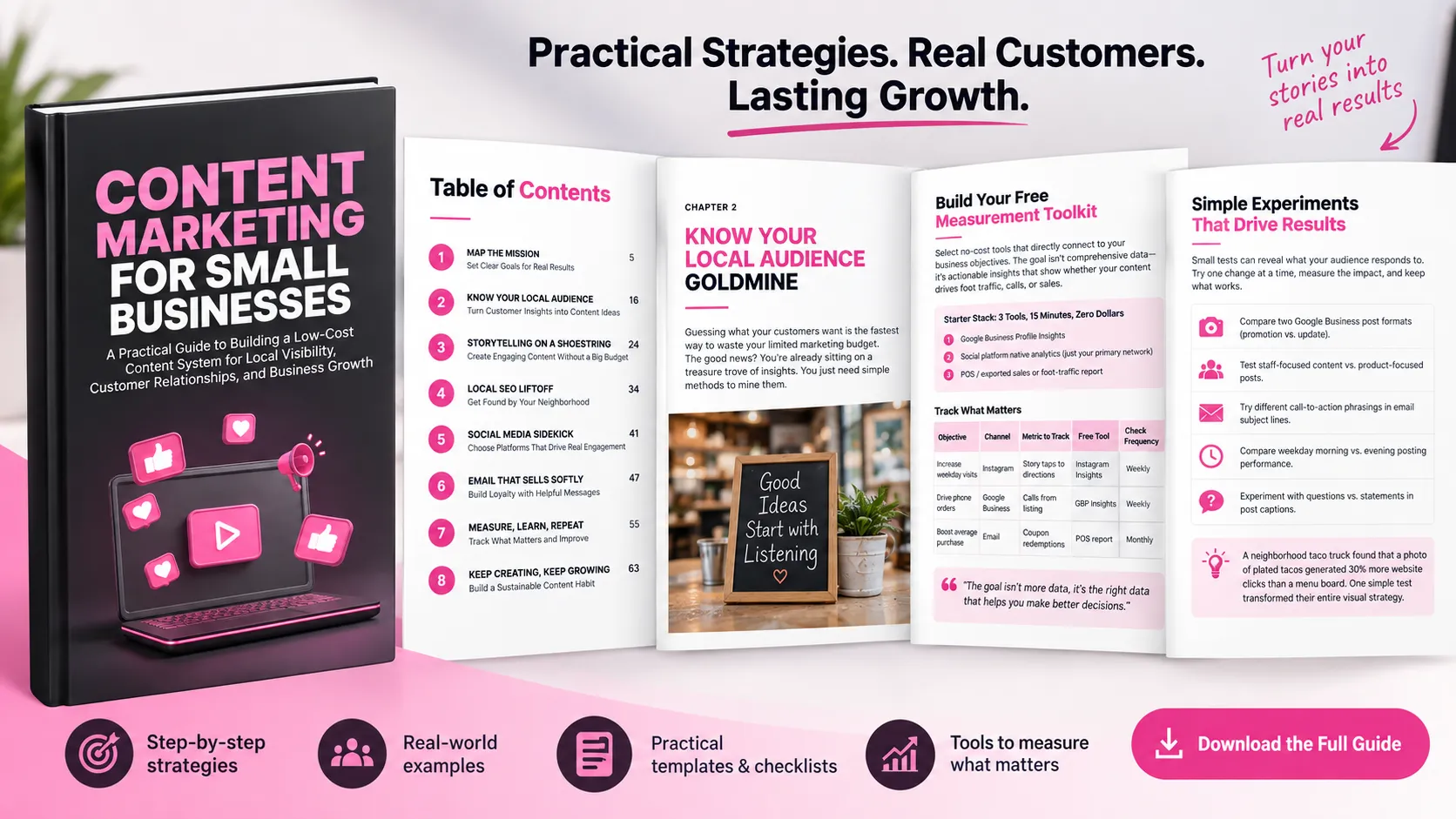
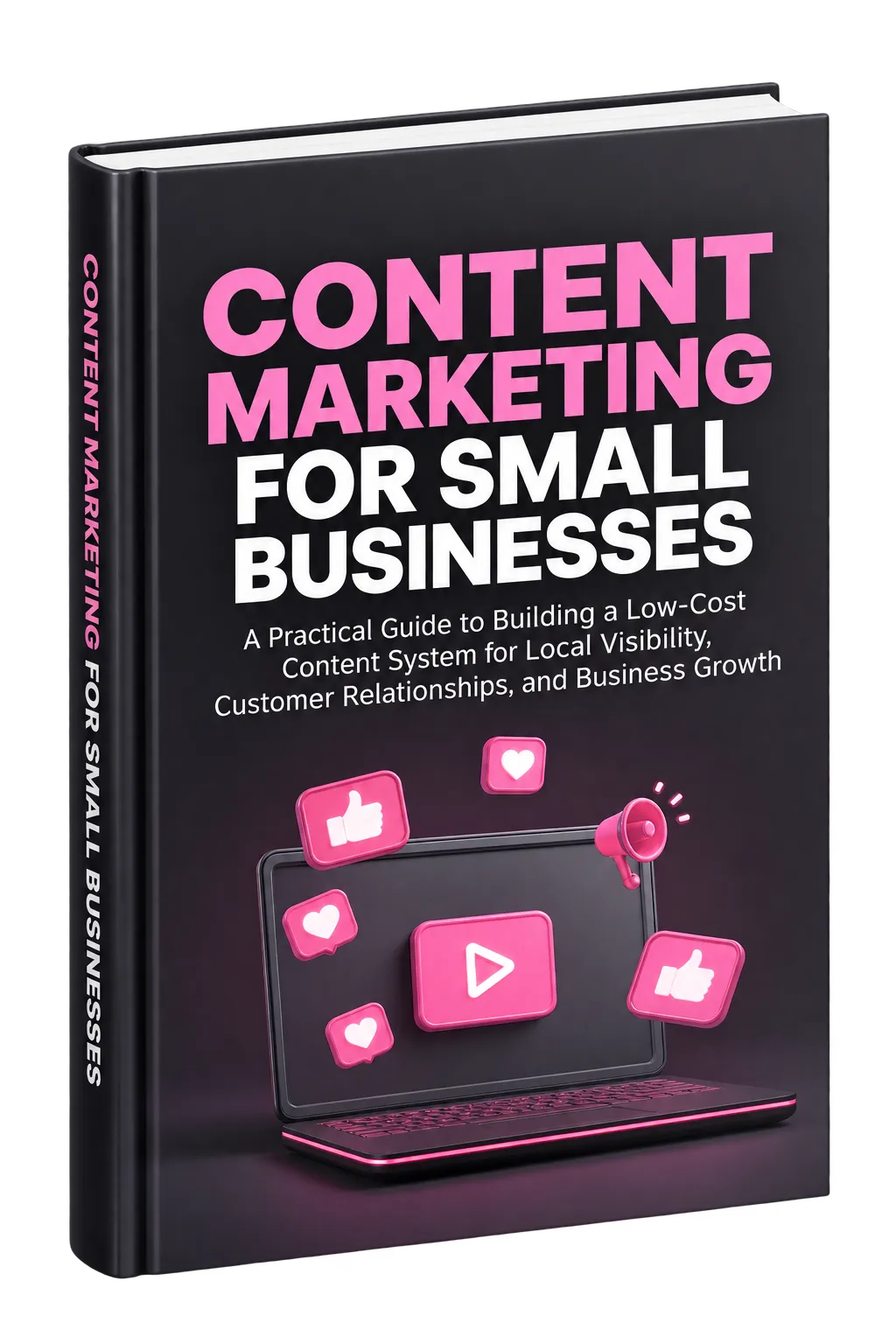
Content Marketing for Small Businesses presents a low-cost system for turning those advantages into consistent marketing activity. The resource is designed for owners and small teams that need practical strategies they can fit around the demands of running a business.
The approach moves from planning to customer research, content creation, local visibility, distribution, retention, measurement, and long-term improvement. The central idea is to create content with a clear purpose rather than simply producing more posts.
Start With a Clear Marketing Mission
Content becomes much more useful when it is connected to a specific business objective. Instead of trying to increase awareness, followers, visits, sales, engagement, and email subscribers simultaneously, the guide recommends giving each campaign one primary goal.
Possible objectives for a local business include increasing visits during slow periods, generating first-time customer visits, increasing average purchase value, growing an email list or social following, and generating more reviews.
The resource adapts the familiar SMART goal approach to small business realities. A useful objective should be clear, achievable, measurable, and tied to a deadline. For example, a business might aim to increase weekday evening visits by a defined percentage within a specific period through content focused on weekday offers.
Choose Metrics You Can Actually Track
The goal is not to create a sophisticated analytics operation. Instead, businesses should identify measurements that connect directly to the objective.
A business focused on increasing visits might track direction requests, bookings, or foot traffic. A business trying to increase phone orders could monitor calls from its Google Business Profile. An email promotion might be evaluated through coupon redemptions or purchases.
The resource also recommends testing tactics rather than committing resources indefinitely. A one-month experiment with a specific review date can reveal whether an approach deserves more investment.
Use Your Customers as a Source of Content Ideas
One of the strongest ideas in the resource is that local businesses already possess valuable market research. Customers regularly reveal their questions, concerns, preferences, and interests through everyday conversations.
Turn Customer Conversations Into Insights
Frontline employees and owners can ask one targeted question during a transaction, listen carefully, and record useful observations between customers. A short weekly team discussion can then identify recurring themes and turn them into content ideas.
This first-party information can be especially valuable because it reflects the specific audience a business actually serves. A recurring customer question can become a video, article, social post, email, FAQ, or demonstration.
Use Very Short Surveys
Long questionnaires can be difficult for local customers to complete. The guide recommends very short surveys that can be answered in under two minutes using tools such as receipt QR codes, Instagram question stickers, text-message polls, or post-purchase emails.
Questions should use plain language and focus on one decision at a time. Businesses can combine simple rating questions with open-ended questions that reveal what customers want changed or improved.
Listen Online for Content Opportunities
Free online resources can supplement direct customer feedback. Google Trends can reveal seasonal interest, while search questions and competitor content can help identify topics customers want to understand.
The goal is not to copy competitors. Instead, businesses can look for information gaps. If competitors repeatedly discuss the same topics while ignoring a useful customer question, that gap can become an opportunity for differentiated content.
Create Useful Stories Without a Large Production Budget
Good storytelling does not require expensive cameras, production agencies, or elaborate studios. The guide encourages businesses to choose formats that match both the story and the resources available.
Make the Smartphone the Production Studio
A smartphone can support many forms of useful local content, including demonstrations, behind-the-scenes videos, product explanations, staff stories, customer stories, and short educational clips.
The focus should be on clarity and connection rather than production perfection. Small imperfections can make local content feel more authentic when the underlying information is useful and genuine.
Choose Sustainable Formats
Businesses can experiment with short-form video, blogs, photos, or micro-podcasts depending on their strengths. The important consideration is whether the format can be maintained consistently.
A simple piece of content that can be created every week may be more valuable than an elaborate production that happens only occasionally. The resource repeatedly emphasizes consistency over complexity.
Turn Customers Into Co-Creators
User-generated content can extend a business's storytelling while providing social proof and additional customer insight. Businesses can invite customers to share how they use products, obtain appropriate permission, credit contributors, and feature selected submissions.
A structured campaign can make this easier. The guide presents a seven-day UGC campaign built around announcing a prompt, publishing a staff example, highlighting submissions, and ending with a collection of entries and creator credits.
Build Local Visibility With SEO
Local SEO helps businesses connect their content with people searching for products and services in their area. The resource emphasizes speaking the language customers actually use rather than relying only on generic industry terminology.
Understand Local Search Intent
Search intent describes what someone is trying to accomplish with a search. Long-tail keywords can reveal specific needs, while consistent business information helps reinforce local relevance.
Businesses can use customer questions, conversations, surveys, and search behavior to identify topics and phrases that deserve attention in their content.
Treat Google Business Profile as a Digital Storefront
A well-maintained Google Business Profile can support local discovery by keeping important business information current and publishing useful updates. The guide recommends connecting profile activity with analytics so businesses can understand whether content contributes to meaningful actions.
Create Hyper-Local Landing Pages
Businesses serving multiple neighborhoods can create useful location-specific pages rather than relying on a single generic services page. These pages can include neighborhood-specific information, local stories, relevant photos, customer testimonials, maps, structured data, and clear calls to action.
The resource also warns against thin location pages. Existing demonstrations, customer stories, photos, and other authentic material can be adapted to make each page genuinely useful instead of creating near-duplicate pages simply for search visibility.
Use Social Media as a Focused Distribution Channel
Social media should support the broader marketing mission rather than become a separate activity that consumes all available time.
The resource recommends choosing platforms according to the business's audience, available time, existing skills, and objective. A visually oriented business may benefit from Instagram, while a business that relies on events or a different demographic may find another platform more appropriate.
Instead of trying to maintain every social network, the guide recommends focusing on one primary platform and using a secondary platform selectively. A consistent testing period can then reveal whether the channel contributes to meaningful business outcomes.
Create a One-Hour Weekly Routine
A defined weekly content routine makes marketing easier to sustain. Businesses can use a dedicated content session to plan, create, schedule, and organize upcoming material rather than repeatedly deciding what to publish at the last minute.
The goal is not constant posting. It is creating a manageable rhythm that keeps the business visible while protecting the time required to operate the business.
Turn Followers Into Neighbors
Social content should encourage real-world relationships rather than focus exclusively on follower counts. Local stories, customer participation, useful information, community connections, and clear calls to action can help turn online attention into visits and relationships.
Use Email to Build Repeat Relationships
Email provides a direct channel for staying connected with customers after an initial interaction. The guide recommends growing an email list through useful, value-oriented offers rather than aggressively asking customers to subscribe.
Examples include discounts, product care information, restock notifications, special-event access, and useful updates. Clear permission and appropriate unsubscribe practices are essential for maintaining trust and meeting applicable requirements.
Create a Simple Welcome Sequence
A welcome sequence can introduce new subscribers to the business without immediately turning every interaction into a sales pitch. The resource outlines a three-email approach that begins with a thank-you message, sets expectations, provides useful information, and can include an appropriate incentive for a future visit.
Write Emails Customers Can Actually Read
Email content should remain relevant, useful, and easy to understand. Subject lines, calls to action, timing, and message topics can be tested to discover what works best for a specific audience.
Automate Repeat Engagement
Simple automation can maintain relationships while reducing manual work. The guide provides examples such as birthday offers, post-purchase care tips, review requests, re-engagement messages, and reminders connected to neighborhood events.
Segmentation can also make messages more relevant by organizing subscribers according to information such as product interest, visit frequency, or neighborhood.
Measure What Actually Matters
Effective measurement does not require an overwhelming collection of dashboards. The resource recommends starting with a small free measurement toolkit that connects directly to business objectives.
A suggested starter stack includes Google Business Profile Insights, the native analytics for the primary social platform, and a point-of-sale or foot-traffic report.
Apply the 3 Qs Filter
The guide introduces a simple way to decide which metrics deserve attention:
- Does it quantify revenue or visits?
- Does it show quick movement after content is published?
- Can you affect it quickly with content adjustments?
Metrics that pass these tests are more useful for a small business than numbers that look impressive but have little connection to business outcomes. For example, follower count may be less actionable than direction requests, bookings, calls, or other customer actions.
Build a Monthly Improvement Rhythm
Businesses can review their most useful metrics monthly, identify what worked, document customer feedback, and decide what to continue, change, or stop. Testing different content formats, topics, calls to action, posting times, or Google Business content can produce practical insights without requiring large investments.
The resource recommends comparing results against the business's own historical performance rather than relying too heavily on broad industry benchmarks. Local context, business type, audience, and customer relationships all affect results.
Build a Sustainable Content System
The final stage is not about finding another platform or chasing every new trend. It is about creating a system that can continue working as the business grows.
Businesses can maintain a weekly content power hour, schedule a monthly metrics review, build a content bank for busy periods, and use periodic editorial sprints to create cornerstone material that can later be repurposed.
A simple content compass can keep the strategy aligned:
- What is our mission?
- Who are we talking to?
- Which channels matter most?
- How often will we publish?
- Which metrics define success?
Celebrate Progress
Documenting wins helps businesses understand which actions produced results. Useful examples include the highest-performing post, a customer comment about content, an important sales day connected to a specific piece of content, a highly shared post, a new audience insight, or a new collaboration.
Recording these outcomes creates a practical history of what works and helps replace guesswork with evidence.
Plan Experiments for the Year Ahead
The resource recommends setting one meaningful experiment per quarter rather than pursuing many disconnected initiatives. A new content format, local collaboration, channel, or campaign can be tested with a defined resource requirement, success metric, and review date.
This creates a structured path for improvement while protecting the business from constant distraction.
The Core Approach
The system presented throughout the resource can be viewed as a continuous cycle:
- Define the mission. Choose one meaningful business objective.
- Listen to customers. Capture questions, preferences, and feedback.
- Create useful content. Turn existing expertise and stories into sustainable formats.
- Improve local visibility. Use search, Google Business Profile, and relevant local pages.
- Distribute selectively. Focus on the social and email channels that fit the audience.
- Measure business actions. Prioritize visits, calls, sales, bookings, and other meaningful outcomes.
- Learn and experiment. Keep what works, adjust what does not, and test new approaches deliberately.
- Build the habit. Make content part of the operating rhythm rather than an occasional campaign.
The overall message is straightforward: small businesses can build effective content marketing systems without large budgets. Their strongest assets are often already available through customer relationships, local knowledge, authentic stories, and practical expertise. The challenge is turning those assets into a focused, measurable, and sustainable routine.
With consistent listening, useful storytelling, focused distribution, local search optimization, customer retention, and disciplined measurement, content can become more than a collection of posts. It can become a repeatable system for strengthening local visibility and customer relationships while supporting real business objectives.