Using AI Across the Email Marketing Lifecycle
Lifecycle email marketing involves more than writing individual emails. Different stages of the customer journey require different strategic approaches, from building an audience and nurturing initial interest to encouraging conversions, strengthening loyalty, measuring performance, and maintaining deliverability.
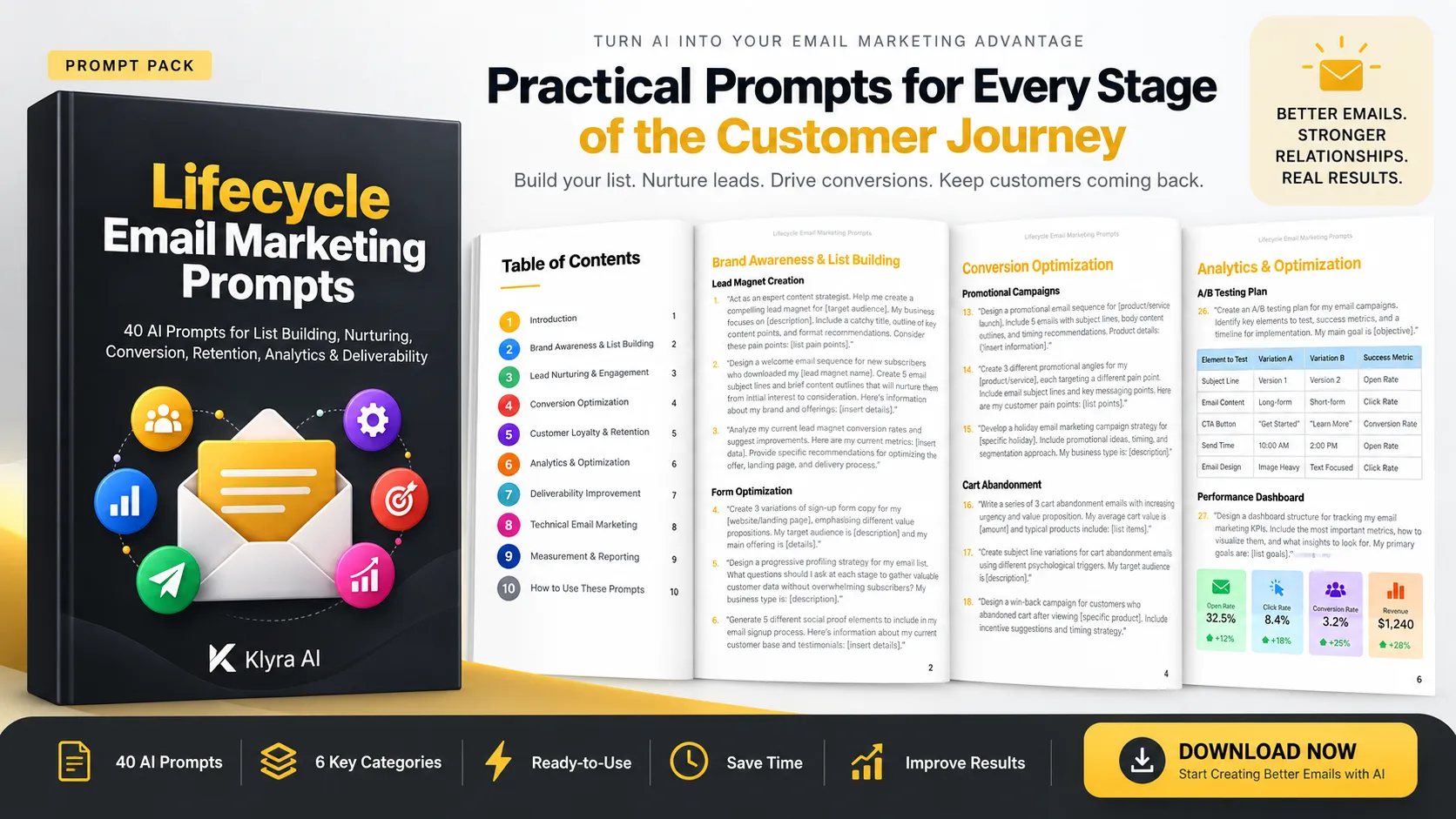
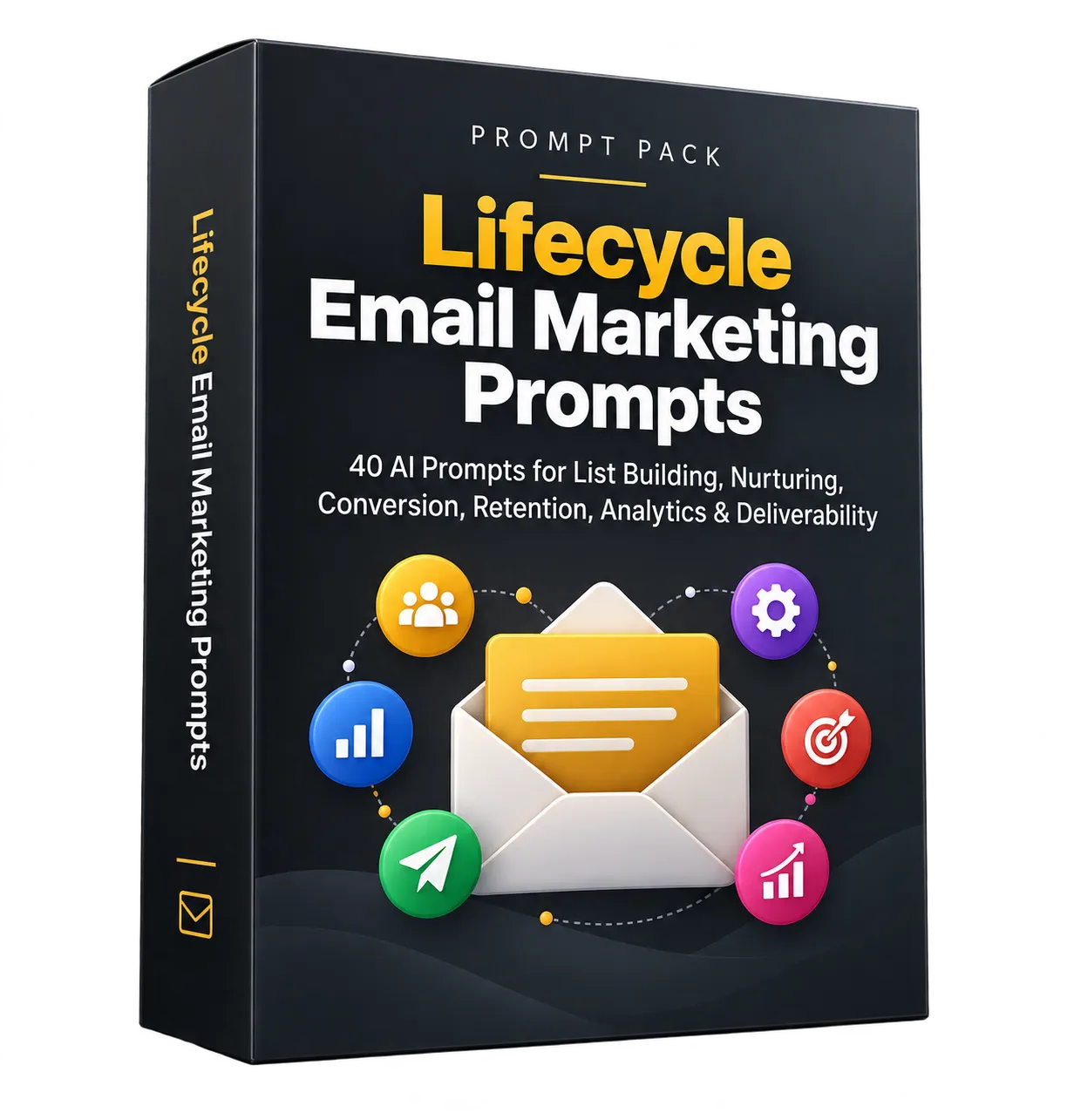
Lifecycle Email Marketing Prompts provides a structured collection of AI prompts designed around these needs. The prompts can help marketers move from strategy to execution by supplying the right context, objectives, customer information, and performance data to an AI system.
The resource is organized around six core areas: brand awareness and list building, lead nurturing and engagement, conversion optimization, customer loyalty and retention, analytics and optimization, and deliverability improvement. Additional prompts extend the collection into technical implementation and measurement and reporting.
Build Awareness and Grow Your Email List
The first stage focuses on creating opportunities to attract and convert subscribers. The prompts cover both lead magnet development and signup form optimization.
Lead Magnet Creation
Marketers can use prompts to develop a lead magnet around a specific target audience, business focus, and set of pain points. The prompts ask AI to help with elements such as the title, key content points, and recommended format.
The collection also includes prompts for building a welcome email sequence for people who downloaded a lead magnet. These prompts are designed to help move subscribers from initial interest toward consideration through subject lines and brief content outlines.
Another prompt focuses on analyzing existing lead magnet conversion rates and identifying improvements to the offer, landing page, and delivery process based on supplied metrics.
Form Optimization
Signup forms are addressed through prompts for creating different versions of form copy based on alternative value propositions. The collection also introduces progressive profiling, asking marketers to consider which questions should be asked at different stages without overwhelming subscribers.
Social proof is another focus. A dedicated prompt can generate different social proof elements for the signup process using information about customers and existing testimonials.
Nurture Leads and Increase Engagement
Once subscribers enter an email list, marketers need ways to understand their audiences and plan relevant communication. The resource addresses this through segmentation, personalization, lead scoring, content planning, and interactive email ideas.
Segmentation Strategy
The segmentation prompts help marketers develop frameworks using behavioral, demographic, and psychographic criteria. The prompts are designed to work with the customer information available to the marketer rather than assuming a predefined segmentation model.
Once segments are identified, marketers can use another prompt to create personalized email templates for each major segment, including subject line variations and content themes.
A lead engagement scoring prompt provides a way to define criteria and point values around selected interaction points. This can help marketers structure how different subscriber actions contribute to an assessment of engagement.
Content Planning
The content planning prompts focus on maintaining a consistent newsletter and educational communication strategy. One prompt can generate a three-month newsletter content calendar containing themes, subject line ideas, and calls to action.
Another helps structure an educational email series by breaking a complex topic into digestible emails that build upon one another. Interactive content ideas are also included for marketers looking to increase engagement around a specific audience and objective.
Optimize Emails for Conversion
The conversion optimization section focuses on promotional campaigns and cart abandonment. These prompts are designed to help marketers develop campaign structures rather than relying on a single promotional message.
Promotional Campaigns
For a product or service launch, marketers can use a prompt to develop a five-email promotional sequence containing subject lines, body content outlines, and timing recommendations.
The resource also provides a prompt for creating multiple promotional angles based on different customer pain points. Another prompt addresses holiday campaigns by combining promotional ideas, timing, and segmentation considerations.
Cart Abandonment
Cart abandonment prompts focus on creating a sequence of three emails with increasing urgency and value proposition. They can also be used to generate subject line variations based on different psychological triggers.
A separate win-back prompt addresses customers who abandoned a cart after viewing a specific product, asking for incentive suggestions and a timing strategy.
Strengthen Customer Loyalty and Retention
Lifecycle marketing continues after a purchase. The resource includes prompts for post-purchase communication, customer milestones, feedback collection, loyalty programs, and VIP customer appreciation.
Post-Purchase Engagement
A post-purchase sequence can be developed around customer success and referrals. The resource also provides prompts for milestone celebration emails, including purchase anniversaries and usage achievements.
Customer feedback is addressed through a dedicated campaign prompt that asks for survey questions, timing, and follow-up approaches.
Loyalty Programs
Marketers can use the loyalty prompts to develop a points-based structure with tier levels, rewards, and a communication strategy. Additional prompts cover emails announcing new loyalty benefits and exclusive offers.
The collection also includes a VIP appreciation campaign focused on a business's top 20% of customers, including special perks and communication strategy.
Measure Performance and Improve Campaigns
Effective lifecycle email marketing requires ongoing analysis. The analytics and optimization prompts focus on using available performance data to identify improvements and establish testing and reporting processes.
Performance Analysis
One prompt asks AI to analyze email marketing metrics and provide specific optimization recommendations based on supplied data. Another helps create an A/B testing plan that identifies elements to test, success metrics, and an implementation timeline.
Marketers can also use a prompt to structure a dashboard for tracking email marketing KPIs according to their primary goals.
Measurement and Reporting
The additional measurement prompts extend this work into recurring reporting and strategic analysis. They cover monthly email marketing reports, email marketing ROI, competitive analysis, customer journey mapping, and content performance across different segments.
Improve Email Deliverability
Deliverability is another part of the resource's lifecycle approach. The prompts provide structured ways to review deliverability factors, address inactive subscribers, and maintain the quality of an email list.
Marketers can use an audit prompt to examine deliverability factors using their current metrics. A re-engagement prompt helps structure campaigns for inactive subscribers by defining segmentation criteria and content strategy.
The collection also includes a list-cleaning strategy prompt intended to help marketers maintain high deliverability rates based on the size of their current list.
Extend Campaigns with Technical Prompts
The resource includes an additional group of prompts for technical and implementation-related email marketing work.
- Optimize email HTML templates for improved mobile responsiveness.
- Create dynamic content rules based on subscriber behavior.
- Develop automation workflows around specific scenarios, including triggers, timing, and content elements.
- Design re-engagement sequences using predictive analytics and available customer data.
- Create personalization tokens based on available subscriber data fields.
These prompts complement the strategic campaign prompts by addressing how email experiences can be adapted to technical requirements, subscriber behavior, automation scenarios, and available customer information.
A Practical Process for Using the Prompts
The resource recommends treating prompt usage as an iterative process rather than simply entering a prompt and accepting the first AI output.
1. Preparation
Before using a prompt, gather the relevant information and define the objective. Include useful context about the business and audience so the AI has information that can inform its response.
2. Prompt Usage
Start with broader strategy prompts before moving into more tactical work. Use follow-up prompts to refine outputs, and combine related prompts when a more comprehensive solution is required.
3. Implementation
Test AI suggestions on small segments first. Monitor the results and make adjustments based on what happens. Successful elements can then be integrated into the broader email marketing strategy.
4. Optimization
Review AI-generated content regularly and refine prompts based on results. The resource also recommends documenting successful prompt patterns so they can be used and improved over time.
Make the Prompts More Useful with Better Context
The prompts in this resource use placeholders such as target audience, business description, customer data, metrics, objectives, pain points, and available data fields. These placeholders are important because the prompts are designed to be adapted to a specific business and situation.
The resource emphasizes four recurring practices: provide specific context, include relevant metrics and data, clearly define objectives and constraints, and iterate based on results.
The goal is not simply to generate more email content. The prompt collection is structured to help marketers use AI throughout the lifecycle of email marketing, from audience development and nurturing to conversion, retention, measurement, technical implementation, and ongoing optimization.
Download the complete resource to access the full collection of lifecycle email marketing prompts and use them as a practical starting point for your own campaigns and workflows.