Build a System for TikTok Shop Content Creation
Effective TikTok Shop content is not simply about generating views. The approach presented in this guide focuses on creating videos that capture attention, communicate product value, encourage engagement, and move viewers toward a purchase.
The system organizes that process into seven days. You begin by establishing a content strategy, then build your filming and publishing workflow, create several types of product content, improve production efficiency, measure performance, and finally turn the process into a sustainable content system.
Start With the Three-Second Hook
The guide places particular importance on the opening three seconds of a video. Viewers make fast decisions about whether to continue watching, so the opening needs to give them a reason to stay.
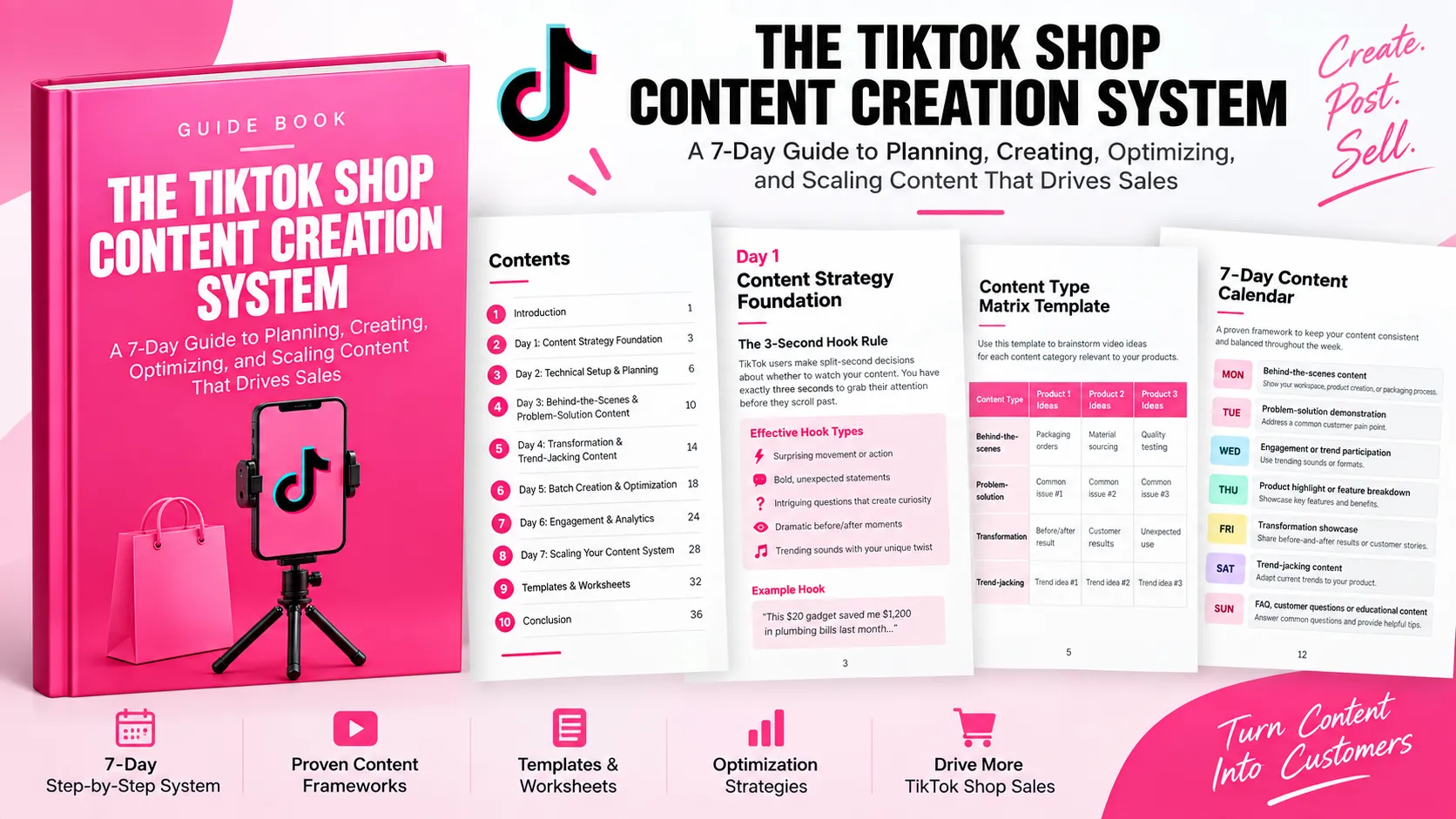
Hook approaches covered in the system include:
- Surprising movement or action
- Bold or unexpected statements
- Questions that create curiosity
- Dramatic before-and-after moments
- Trending sounds adapted to your content
Rather than treating hooks as an afterthought, the system recommends brainstorming them before filming. One of the first exercises is to write ten potential hooks that can be tested across future videos.
Build Around Four Core Content Types
The seven-day system establishes four foundational formats that can be adapted to different products and audiences.
Behind-the-Scenes Content
Behind-the-scenes videos show the real work surrounding a product, such as creating products, preparing orders, selecting materials, performing quality checks, or packaging purchases. The guide recommends showing a real workspace, including small details, adding personal touches, and finishing with the completed product.
Problem-Solution Videos
This format begins with a customer problem and demonstrates how the product addresses it. The framework moves from identifying and emphasizing the pain point to introducing the product, demonstrating the result, mentioning additional benefits, and ending with a clear call to action.
Transformation Content
Transformation videos make product value visible through a clear before-and-after comparison. The guide recommends establishing the starting point, briefly showing the product in use, revealing the result, and emphasizing the difference.
Possible structures include side-by-side comparisons, wipe transitions, time-lapse demonstrations, and collections of customer results.
Trend-Jacking Content
Trend-jacking adapts current TikTok trends, sounds, or formats to a product. The guide emphasizes adapting rather than copying trends and recommends using only trends that naturally fit the product and brand voice.
The process is straightforward: identify a relevant trend, adapt it to a product benefit, execute it in an entertaining way, incorporate the product naturally, and finish with a simple call to action.
Plan a Full Week Before You Start Posting
Consistency becomes easier when content is planned in advance. The resource provides a seven-day content calendar that gives each day a different role:
- Monday: Behind-the-scenes content
- Tuesday: Problem-solution demonstration
- Wednesday: Engagement or trend participation
- Thursday: Product highlight or feature breakdown
- Friday: Transformation showcase or customer results
- Saturday: Trend-jacking or entertainment content
- Sunday: FAQ, customer questions, or educational content
The accompanying planning template goes beyond choosing a content type. It asks you to define the hook, main point, call to action, and any products, props, or setup required for each video.
Keep the Production Setup Practical
The system does not depend on an elaborate studio. It recommends a smartphone with a suitable camera, basic lighting, a simple tripod, and a clean filming environment, with optional additions such as a clip-on microphone, extra lighting, or a backdrop.
For video production, the guide recommends vertical 9:16 footage at 1080p, clear audio, appropriate lighting, useful text overlays, and captions for accessibility and sound-off viewing.
Editing should remain relatively simple. Quick cuts between important moments can keep the focus on the product, demonstration, and message instead of making production unnecessarily complicated.
Turn Individual Videos Into a Batch Production Workflow
Daily filming can become difficult to maintain. The guide therefore introduces batch creation as the foundation of a sustainable production process.
Videos can be grouped by:
- Content type
- Product
- Filming location
- Outfit
A batch session can begin by preparing scripts or outlines, setting up the filming area once, recording multiple hooks, filming demonstrations, recording closing segments and calls to action, and then editing similar videos together.
The seven-day plan progresses from filming individual videos to organizing the next fourteen videos into batches and completing several videos of the same type in one session.
Design Engagement Into the Content
Engagement is treated as part of the content strategy rather than something that happens after publishing. The guide recommends asking specific questions, presenting choices, inviting viewers to share their experiences, requesting tips, and using pinned comments to continue the conversation.
Comment responses are also part of the process. Responses can continue conversations, answer purchasing questions, address objections, and provide additional product information.
Measure Sales Behavior, Not Views Alone
The analytics framework focuses on understanding what happens after someone watches a video. The resource recommends tracking:
- View-to-visitor ratio
- Visitor-to-shop ratio
- Shop-to-sale conversion
- Video completion rate
- Comment rate
- Sales attribution
The guide suggests using TikTok analytics, unique URL parameters, a performance spreadsheet, and testing notes to identify patterns. Recording what changed between videos makes it easier to understand whether differences in hooks, formats, or presentations affected performance.
Recycle Successful Ideas Instead of Starting From Zero
One video can become the foundation for several additional pieces of content. The system recommends showing a demonstration from different angles, focusing on another benefit, replacing the opening hook, applying a new relevant trend, or showing the product from another customer's perspective.
Content can also be adapted beyond TikTok. The guide suggests modifying videos for Instagram Reels, turning demonstrations into Pinterest idea pins, using transcripts for blog or email content, and extracting still images for social posts or product listings.
Move From a Seven-Day Plan to a Sustainable Calendar
The final stage turns the initial week into an ongoing system. The monthly planning framework recommends combining planned content with room for reactive trend content, maintaining a balanced mix of core formats, establishing dedicated production days, publishing consistently, and reviewing performance each week.
The calendar can also account for product launches, promotional periods, seasonal opportunities, inventory availability, customer testimonials, and scheduled analytics reviews.
Improve the System When Performance Changes
The resource also addresses common obstacles. When performance varies, it recommends looking for patterns across multiple videos instead of judging the strategy from one post. When a video performs particularly well, create several variations using similar elements to investigate what contributed to the result.
For creator burnout, the guide recommends batching and scheduled production days. When ideas become difficult to find, maintain an idea bank built from customer questions, successful content, trends, and previous performance. When views are high but conversions remain low, examine the complete path from video to profile, shop, and purchase to identify where viewers are dropping away.
The Seven-Day TikTok Shop Content Workflow
- Day 1: Establish your strategy, audit relevant content, build a content-type matrix, and brainstorm hooks.
- Day 2: Prepare your filming environment and create a seven-day publishing calendar.
- Day 3: Produce behind-the-scenes and problem-solution videos.
- Day 4: Create transformation and trend-jacking content.
- Day 5: Optimize production and establish a batch-filming workflow.
- Day 6: Improve engagement and establish performance tracking.
- Day 7: Build recycling, repurposing, monthly planning, and production systems for ongoing content creation.
The complete guide expands each stage with practical action items, content frameworks, script structures, checklists, planning tables, analytics metrics, and reusable templates. The objective is to replace occasional posting with a repeatable process built around consistency, analysis, and continuous refinement.