Communicating AI Adoption Effectively
Introducing an AI tool is not only a technology change. How the change is communicated can influence whether people understand the purpose, feel prepared for new workflows, and engage with the implementation.
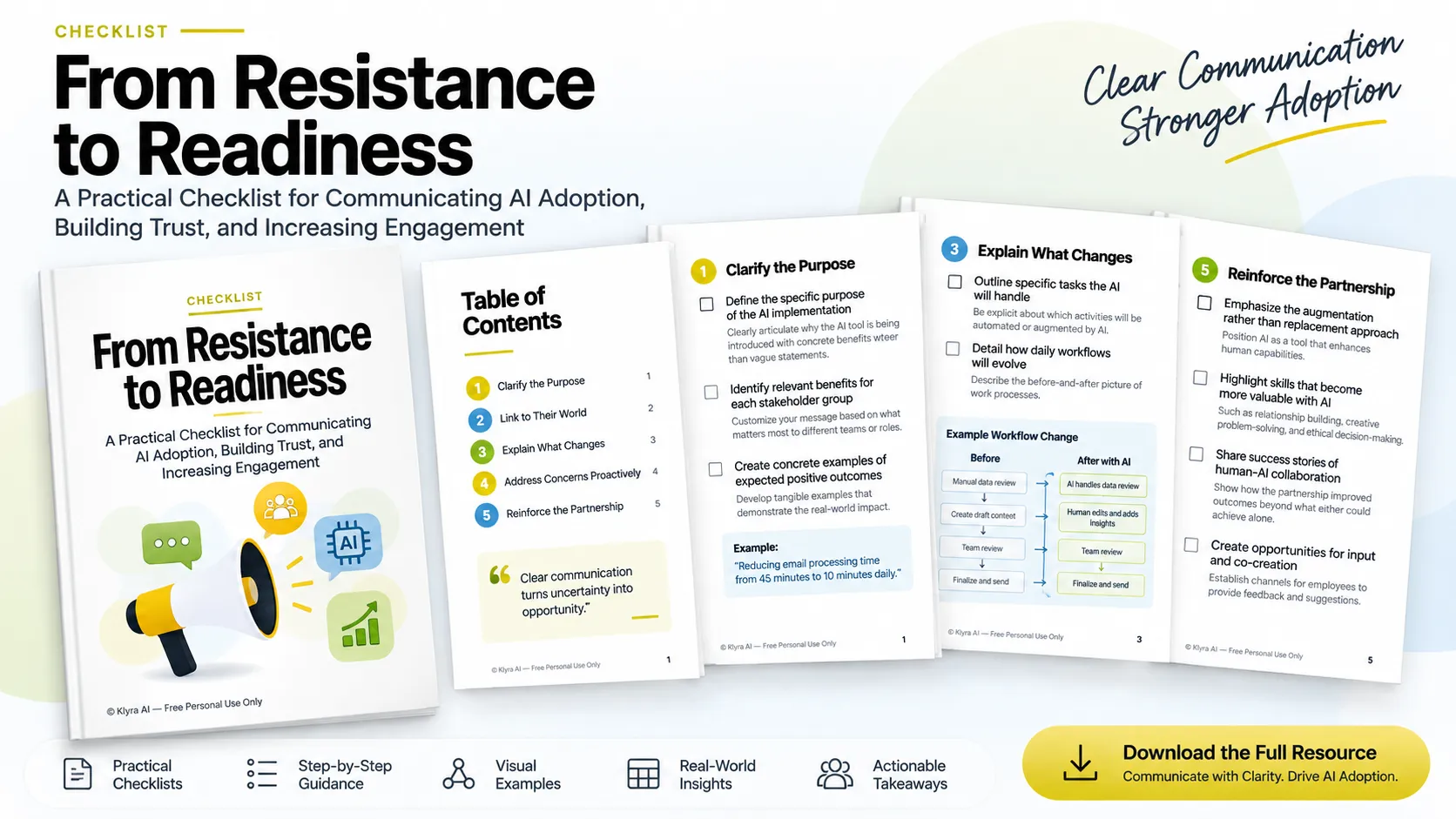
Communicating AI Adoption Effectively provides a structured approach for communicating AI adoption in a way that addresses concerns, builds trust, and encourages engagement. The approach is organized around five stages known as the CLEAR method: Clarify, Link, Explain, Address, and Reinforce.
The CLEAR Method for AI Adoption Communication
The CLEAR method provides a practical structure for planning communication around an AI implementation. Rather than relying on vague statements about the benefits of AI, it encourages specific explanations, relatable examples, transparent communication, and continued involvement from the people affected by the change.
1. Clarify the Purpose
The first step is to clearly explain why the AI tool is being introduced. Communication should focus on concrete outcomes rather than broad or vague claims about artificial intelligence.
Examples of specific outcomes include saving time on routine tasks, reducing errors, or improving customer service. Defining the purpose in practical terms gives people a clearer understanding of what the implementation is intended to accomplish.
The message should also reflect the priorities of different stakeholder groups. Different teams may value different outcomes. For example, technical teams may care about accuracy, while customer-facing staff may place greater importance on faster response times.
Concrete examples can make the expected impact easier to understand. The checklist gives an example of describing a potential improvement as reducing email processing time from 45 minutes to 10 minutes daily rather than simply saying that the new system will improve efficiency.
2. Link AI to Their World
New AI concepts can feel unfamiliar. Connecting them to tools, processes, and ideas people already understand can make them easier to grasp.
One approach is to draw parallels between an AI capability and familiar technology. For example, an AI scheduling assistant can be compared with a smart calendar that never forgets appointments.
Analogies can also make technical concepts more accessible. The checklist uses the comparison of machine learning to developing a skill through practice. The purpose is to translate complex concepts into language that people can relate to.
Relevant industry examples can provide another connection. Sharing examples of similar companies or teams that have adopted comparable AI tools can help audiences understand how the technology relates to situations they recognize.
Explain What Will Change
People need to understand not only why AI is being introduced, but also how their work will change.
Define the Tasks AI Will Handle
Be explicit about which activities will be automated or augmented by AI. A clear distinction should be made between responsibilities that are shifting to AI and responsibilities that remain human-centered.
This gives people a practical picture of how the technology fits into their work rather than leaving them to make assumptions about what AI will do.
Describe How Workflows Will Evolve
Explain the difference between the current workflow and the workflow after AI is introduced. A before-and-after view can make changes easier to understand.
Visual aids such as flow charts can also be used to show how routines will evolve and where AI fits into the process.
Clarify Changing Performance Expectations
AI adoption can also affect how work is evaluated. Communication should address whether performance expectations or evaluation criteria may change as AI takes responsibility for certain tasks.
The checklist recommends framing these changes around the opportunity for employees to focus on higher-value activities as AI takes on specific responsibilities.
Address Concerns Proactively
AI adoption can create uncertainty. Rather than waiting for concerns to surface, communication should acknowledge them directly.
Name Common Concerns
Concerns may include job security, skill obsolescence, and decision-making authority. Addressing these topics directly recognizes the concerns people may have and helps establish a more open communication environment.
Be Honest About AI Limitations
Trust depends on realistic expectations. Clearly communicate what the AI cannot do and where human judgment remains essential.
Being transparent about limitations helps prevent unrealistic expectations and supports credibility around the implementation.
Explain Error Handling
People should understand how mistakes will be identified, reported, and corrected. The checklist emphasizes the partnership between humans and AI in quality control rather than treating AI output as something that requires no human oversight.
Provide Support Resources
Communication should also explain where people can get help while adapting to the new tools. Relevant support can include training, documentation, helpdesk resources, and peer support systems.
Making support available can reduce anxiety and help people adapt to changes associated with AI adoption.
Reinforce the Human-AI Partnership
The final stage of the CLEAR method focuses on reinforcing the relationship between people and AI.
Emphasize Augmentation Rather Than Replacement
AI should be positioned consistently as a technology that enhances human capabilities rather than simply replacing them.
The checklist illustrates this approach with the idea that AI can handle data sorting while people focus on creative solution development. The message shifts attention from what AI removes from a role toward how AI can change the way people spend their time.
Highlight Valuable Human Skills
An AI-enhanced environment can make certain human capabilities particularly important. The checklist identifies skills such as relationship building, creative problem-solving, and ethical decision-making.
Communication should identify these capabilities and explain their importance as people work alongside AI.
Share Human-AI Success Stories
Examples of teams successfully working alongside AI can demonstrate what collaboration looks like in practice. These stories should focus on how the partnership produced improved outcomes beyond what either people or AI could achieve alone.
Create Opportunities for Input and Co-Creation
AI adoption should not be communicated as a process in which employees simply receive instructions. Establish channels for people to provide feedback and suggestions about the implementation.
This reinforces the idea that employee expertise can help shape how the technology is used and creates an opportunity for people affected by the implementation to contribute to its development.
A Practical Communication Checklist
Before communicating an AI implementation, use the CLEAR method to check whether the key areas have been addressed:
- Clarify: Is the purpose of the AI implementation clearly defined with concrete outcomes?
- Stakeholders: Have the benefits been connected to what matters to different teams or roles?
- Link: Have AI capabilities been connected to familiar tools, processes, or relatable examples?
- Explain: Have the specific tasks, workflow changes, and potential shifts in performance expectations been explained?
- Address: Have common concerns, AI limitations, error handling, and available support been discussed openly?
- Reinforce: Has the communication emphasized human-AI augmentation and the continued importance of human capabilities?
- Collaborate: Have people been given opportunities to provide feedback and suggestions?
Turning AI Communication Into Readiness
Effective AI adoption communication is not simply about explaining a new technology. It is about helping people understand its purpose, see how it connects to their work, understand what will change, and know where human judgment continues to matter.
The CLEAR method provides a structured way to approach that communication. Start by clarifying the purpose and relevant benefits. Link unfamiliar AI capabilities to familiar experiences. Explain exactly how work will change. Address concerns and limitations honestly. Then reinforce the idea of human-AI collaboration by highlighting valuable human skills, sharing success stories, and creating opportunities for input.
Used as a checklist, these steps can help create clearer communication around AI implementation while supporting trust, readiness, and lasting engagement with AI tools.
Download the complete checklist for the full set of recommendations and use it when preparing communications for an AI adoption initiative.